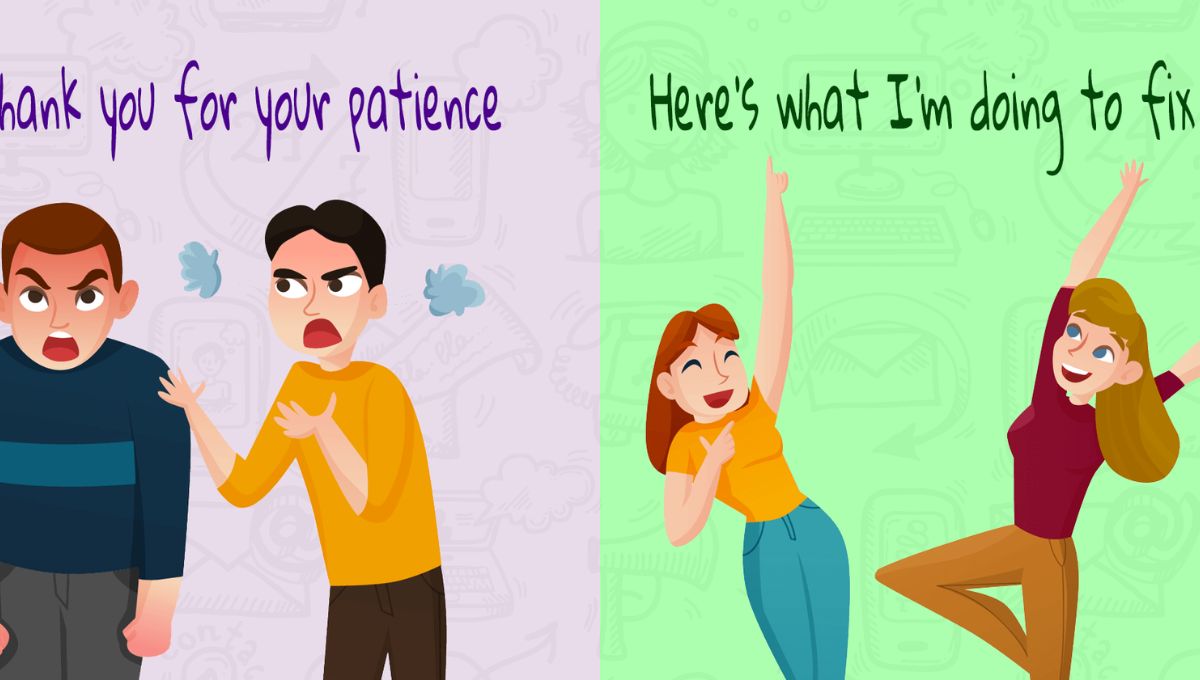
Ever typed “thank you for your patience” into an email and then paused, wondering if it actually sounds sincere? You’re not alone.
This phrase shows up everywhere — customer service replies, doctor’s office texts, that one coworker who’s always five minutes late to meetings. It’s become such a default line that most of us type it without thinking twice.
But here’s the thing: the phrase carries more meaning than it gets credit for. It’s not just filler. Used well, it builds trust and keeps relationships warm even during an inconvenience. Used badly — say, repeated in every single email you send — it starts to sound robotic, impersonal, or flat-out lazy.
This guide breaks down what the phrase really means, when it works, when it doesn’t, and what to say instead when you want to sound a little more human.
What Does “Thank You for Your Patience” Actually Mean?
At its core, “thank you for your patience” is a way of thanking someone for staying calm during an inconvenience — a delay, a slow reply, a wait they didn’t ask for.
It’s short for something like: “I noticed you didn’t get frustrated with me, and I appreciate that.”
That’s a subtle but important distinction. The phrase doesn’t apologize. It doesn’t say “sorry.” It says thank you.
And that swap — from apology to appreciation — completely changes how the message lands.

The Real Meaning Behind the Words
Break the phrase into its two working pieces, and the meaning gets a lot clearer:
- “Thank you” — gratitude, plain and simple.
- “Your patience” — the other person’s willingness to wait, stay calm, and not blow up at you.
Put together, you’re recognizing someone’s behavior, not your own mistake. That’s why the phrase feels lighter than “sorry for the wait.” It hands the spotlight to the other person’s patience instead of your delay.
Think about a flight delay announcement. The gate agent could say “sorry for the inconvenience” on repeat, or they could say, “thank you for your patience while we sort this out.”
Read This Blog…WTM Meaning in Text: Slang, Abbreviations & Chat Examples
Thank You for Your Patience vs. Thank You for Your Understanding
These two phrases get mixed up constantly, but they’re not interchangeable. One is about time. The other is about acceptance.
| Phrase | Focuses On | Best Used When |
| Thank you for your patience | Waiting, time, delay | A delay is happening or just ended |
| Thank you for your understanding | Acceptance, empathy | Someone accepted a change, policy, or explanation |
Example of patience:
“Thank you for your patience while we process your refund.” (Something is still in progress.)
Example of understanding:
“Thank you for your understanding regarding the schedule change.” (Nothing is delayed — someone just accepted a decision.)
Mixing these up is one of the most common misunderstandings people run into. Getting it right shows attention to detail, and it keeps your written communication sounding sharp instead of generic.
Pros or Cons of Using This Phrase
| Pros | Cons |
| Sounds polite and professional in nearly any setting | Can feel scripted if overused |
| Maintains respect without dwelling on the mistake | May sound robotic or impersonal in repeated messages |
| Builds trust by acknowledging the other person’s time | Doesn’t work well when someone is genuinely upset |
| Works across formal and informal contexts | Can feel hollow without a follow-up explanation |
| Keeps communication calm during inconvenience | Loses impact through repetition |
Thank You for Your Patience — Examples for Real Situations
Context changes everything here. The right wording for a customer service message isn’t the same as what you’d text a friend. Below are natural, ready-to-use examples grouped by where you’d actually use them.
Examples for Work Emails
Workplace communication calls for a professional tone, but it doesn’t need to sound stiff or overly formal.
- “Thank you for your patience while we finalize the budget numbers — I’ll have them to you by Thursday.”
- “I appreciate your patience during the transition; the new system should be fully live by next week.”
- “Thanks for your patience on this one. I know it’s dragged on longer than expected.”
- “We appreciate your continued patience as the team works through the backlog.”
Examples for Customer Service Messages
Customer service is where this phrase gets used most, so variety matters. Repeating the same line to every customer starts to feel impersonal fast.
- “Thank you for waiting — I’ve pulled up your account and I’m looking into this now.”
- “We appreciate your patience while our support team investigates the issue.”
- “Thanks for bearing with us during the system outage earlier today.”
- “Your patience means a lot to us, and we’re working to get this resolved quickly.”
Examples for Texts and Casual Conversations
Casual conversation calls for warmer, friendlier phrasing — something that sounds like a real person typing, not a business.
- “Thanks for waiting! My phone died earlier, my bad.”
- “Appreciate you being patient with me today, it’s been a mess.”
- “Thanks for hanging in there, I’ll call you in ten.”
- “Sorry that took forever, thanks for your patience lol.”
Examples for Social Media and Brand Updates
Brand messaging on social platforms needs to reassure a wide audience at once, so it tends to lean slightly more formal while staying warm.
- “Our site’s back up! Thank you for your patience during the maintenance window.”
- “We’re aware of the delay and appreciate your patience — updates coming soon.”
- “Thanks for sticking with us through the outage. We’re back and better than ever.”
Real-Life Conversations Across Platforms
Different platforms call for different levels of formality, even when the sentiment is the same.
Person A: Sorry! I’ve been in meetings all afternoon.
Person B: No worries.
Person A: Thank you for your patience — I’m finally free now.
Instagram DM
Customer: Hey! Any update on my order?
Brand: Yes! It ships tomorrow. Thank you for your patience and understanding.
TikTok Comments
Follower: When’s Part 2 coming?
Creator: Editing took longer than expected. Thank you for your patience — it’ll be live tonight!
Text Messages
Person A: The doctor’s running behind schedule.
Person B: Thanks for letting me know.
Person A: Thank you for your patience, we should be done soon.
Examples for Social Media and Brand Updates
- “Our site’s back up! Thank you for your patience during the maintenance window.”
- “We’re aware of the delay and appreciate your patience — updates coming soon.”
- “Thanks for sticking with us through the outage. We’re back and better than ever.”
When Not to Say “Thank You for Your Patience”
Not every situation calls for this phrase, and using it in the wrong moment can damage trust instead of building it.
When You Actually Owe an Apology First
If your mistake caused real harm, gratitude alone isn’t enough. Lead with a full apology first, then add appreciation afterward.
Better version:
“I’m sorry for the mix-up — that shouldn’t have happened. Thank you for your patience while we sort it out.”
When No One Was Really Waiting
If there was no delay, don’t force the phrase in. It reads as scripted and disconnected from the actual situation.
When Someone’s Upset, Not Just Delayed
There’s a real difference between a customer who’s simply waiting and one who’s genuinely upset or frustrated. In the second case, empathy first matters more than gratitude.
Acknowledge the frustration directly before thanking anyone for staying calm — because in that moment, they might not be calm at all.
Other Ways to Say “Thank You for Your Patience”
Variety keeps your writing from sounding repetitive. Here’s a curated set of alternative ways to express the same sentiment, grouped by tone.
Warmer, More Personal Alternatives
- “I appreciate your understanding”
- “I’m grateful for your patience”
- “Your patience means a lot to me”
- “Thank you for staying with me on this”
More Formal, Professional Alternatives
- “Thank you for your continued support”
- “We appreciate your cooperation”
- “I appreciate your time and patience”
- “I value your patience”
Short and Casual Alternatives
- “Thanks for waiting”
- “Thanks for bearing with me”
- “Thanks for hanging in there”
- “Thank you for giving me a moment”
A quick rule of thumb:
match the phrase’s weight to the situation. A ten-minute wait doesn’t need “I’m deeply grateful for your patience.” Save the heavier language for genuinely long delays or ongoing projects.
Gen Z vs. Millennials: How Each Generation Uses This Phrase
Even a phrase this simple shifts slightly depending on who’s typing it.
Gen Z
Gen Z tends to favor shorter, more casual wording, even in semi-professional settings. Instead of the full formal phrase, expect:
- “Thanks for waiting!”
- “Appreciate you!”
- “Thanks for hanging in there!”
The tone leans conversational, and the full formal version can feel a little stiff or old-fashioned in casual conversations among younger users.
Millennials
Millennials tend to switch between formal and casual depending on context. In workplace communication or professional emails, they’ll often default to the full phrase or “thank you for your patience and understanding.”
In casual conversations with friends, they’ll shorten it to something like “thanks for waiting!” — essentially code-switching based on the appropriate context.
How to Respond When Someone Thanks You for Your Patience
It’s easy to overlook, but knowing how to respond matters just as much as knowing how to say it.
- Casual: “No worries at all!”
- Professional: “Of course — happy to wait, just keep me posted.”
- Warm/personal: “Anytime. I know these things take time.”
- Brief and friendly: “Glad it’s sorted now!”
There’s no single correct answer — just match the tone the other person used.
Thank You for Your Patience vs. Thank You for Your Understanding
These two phrases get mixed up constantly, but they’re not interchangeable. One is about time. The other is about acceptance.
| Phrase | Focuses On | Best Used When |
| Thank you for your patience | Waiting, time, delay | A delay is happening or just ended |
| Thank you for your understanding | Acceptance, empathy | Someone accepted a change, policy, or explanation |
Other Ways to Say “Thank You for Your Patience”
Variety keeps your writing from sounding repetitive. Here’s a curated set of alternative ways to express the same sentiment, grouped by tone so you can pick what fits.
Warmer, More Personal Alternatives
- “I appreciate your understanding”
- “I’m grateful for your patience”
- “Your patience means a lot to me”
- “Thank you for staying with me on this”
More Formal, Professional Alternatives
- “Thank you for your continued support”
- “We appreciate your cooperation”
- “I appreciate your time and patience”
- “I value your patience”
Short and Casual Alternatives
- “Thanks for waiting”
- “Thanks for bearing with me”
- “Thanks for hanging in there”
- “Thank you for giving me a moment”
A quick rule of thumb:
match the phrase’s weight to the situation. A ten-minute wait doesn’t need “I’m deeply grateful for your patience.” Save the heavier language for genuinely long delays or ongoing projects.
How to Respond When Someone Thanks You for Your Patience
It’s easy to overlook, but knowing how to respond matters just as much as knowing how to say it in the first place.
Casual:
“No worries at all!”
Professional:
“Of course — happy to wait, just keep me posted.”
Warm/personal:
“Anytime. I know these things take time.”
Brief and friendly:
“Glad it’s sorted now!”
Final Thoughts
At the end of the day, “thank you for your patience” isn’t about finding the one perfect sentence — it’s about paying attention to the moment.
Did someone actually wait? Is the delay small or significant? Are they calm, or genuinely frustrated? Answering those questions honestly will tell you whether the classic phrase fits, or whether a warmer, more personal alternative would land better.
The words themselves matter less than the intent behind them. A sincere, well-timed “thanks for bearing with me” will always beat a copy-pasted “thank you for your patience” that shows up in every email regardless of context.
Keep your language varied, match your tone to the situation, and lead with empathy when someone’s upset rather than gratitude they haven’t earned yet.
Do that consistently, and this small phrase will keep doing exactly what it’s meant to do: maintain respect, maintain trust, and make people feel genuinely appreciated — not just processed.
FAQs
Is it okay to say “thank you for your patience” in a professional email?
Yes — it’s widely accepted in workplace communication and customer service messages. Just avoid repeating it in every single message, or it starts to feel robotic.
What’s a good alternative to “thank you for your patience”?
“I appreciate your understanding,” “Thanks for bearing with me,” and “Thank you for your continued support” all work well depending on the tone you need.
Which alternative works best for formal communication?
“I appreciate your understanding” or “Thank you for your continued support” both sound professional and respectful.
How does tone affect the phrase?
A warm, sincere tone builds trust, while a flat or copy-paste delivery can undercut the message entirely, even if the words are right.
What alternative should I use for group communication?
“Thank you for bearing with us” works well for addressing a group, team, or customer base at once.
How do I reply to “thank you for your patience”?
A simple “No worries!” or “Happy to wait, just keep me posted” works fine in most casual and professional contexts.
Is “thank you for your patience” the same as apologizing?
An apology focuses on your mistake; this phrase focuses on the other person’s calm behavior while waiting. They can be used together for serious delays.
Do these alternatives work for international communication?
Many translate well since they express universal values like respect and gratitude, but simpler phrasing is safer with non-native English speakers.
How do you reply to “thank you for your patience”?
A simple “No worries!” or “Happy to wait, just keep me posted” works fine in most casual and professional contexts.
Is “thank you for waiting” the same as “thank you for your patience”?
Almost — “thank you for waiting” is a slightly more direct, simpler version, while “thank you for your patience” carries a bit more warmth and acknowledges the emotional effort of staying calm.