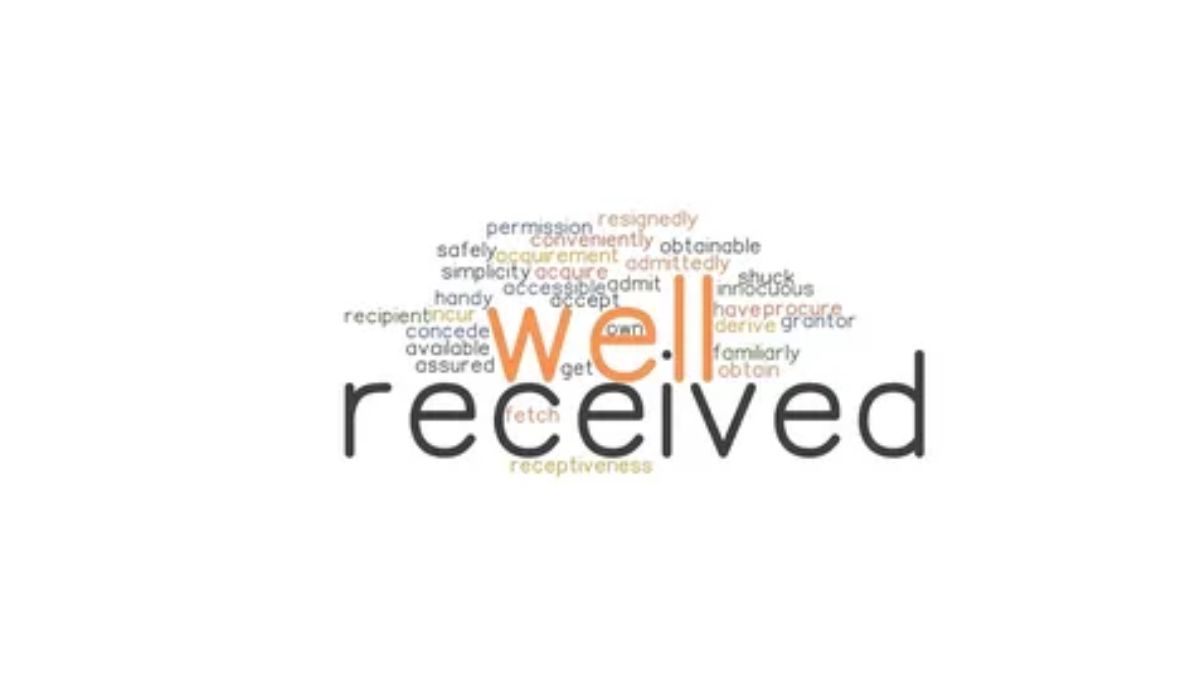
You’ve written the same line in three emails this week: “The proposal was well received.” It’s not wrong, exactly.
It’s just… flat. You know there was more going on in that meeting than a polite nod, but “well received” doesn’t tell anyone what actually happened.
That’s the problem with this phrase. It’s safe, it’s grammatically tidy, and it says almost nothing about how people truly felt.
This guide breaks down 25 alternatives to “well received,” each with its own tone, its own best-fit setting, and a real example so you can see exactly how it lands on the page.
By the end, you’ll know when to reach for “embraced,” when “well regarded” fits better, and when you should just say people loved it.
Did You Know “Well Received” Can Have Different Meanings?
Here’s something most writers never stop to consider: “well received” doesn’t mean one single thing. Context does most of the heavy lifting.
Say it about a business proposal, and it signals approval — the board looked it over and gave it the green light.
Say it about a new employee, and it signals acceptance — the team welcomed them without friction. Say it about a product launch, and it signals positive reaction from customers who actually bought the thing.
The phrase stretches to cover approval, acceptance, appreciation, and even simple politeness, all under one roof.
There’s also a small grammar quirk worth knowing. When the phrase sits before a noun, it takes a hyphen: “a well-received keynote.”
When it follows the verb “to be,” the hyphen drops: “the keynote was well received.” Small detail, but editors notice it, and so do sharp readers.
Read This Blog…XD Meaning in Text: Slang, Abbreviations & Chat Examples
What Does “Well Received” Mean?
In short: “Well received” means something — an idea, a message, a person, a product — got a favorable response from the people who encountered it.
It signals approval, acceptance, or a positive reaction, without necessarily saying how strong that reaction was.
That last part matters. The phrase covers everything from a polite thumbs-up to genuine enthusiasm, which is exactly why it can feel vague.
If your board “approved” a plan with mild interest and another team “approved” it with a standing ovation, “well received” describes both scenarios identically. You lose the texture. That’s the gap this whole list is here to fill.
When to Use “Well Received”
“Well received” earns its keep in situations where you need a neutral, professional summary rather than an emotional account. It shows up constantly in:
- Reports and proposals — summarizing how leadership responded to a pitch
- Policies and campaigns — describing public or employee reaction
- Announcements and press releases — signaling a favorable rollout
- Performance reviews — noting how a project or presentation landed
- Customer reviews and stakeholder updates — describing general sentiment
- Meetings and workplace messages — quick, professional shorthand
Is It Professional or Polite to Say “Well Received”?
Yes, without question. “Well received” is one of the safest phrases in professional communication — neutral, polite, and impossible to misread.
That’s exactly why it shows up so often in corporate communication, political communication, and public relations.
Nobody gets offended by it, and nobody reads too much emotion into it either.
That safety comes at a price, though. Overuse it, and your writing starts to sound like it was generated by a template rather than written by someone who actually paid attention to the room.
Genuine recognition and warm and professional wording tend to land better when the phrasing feels specific to the moment, not recycled from the last five reports you wrote.
Read This Blog…What Does WH Mean in Text Messages Today? The Complete 2026 Guide 🤔💬
Pros and Cons
| Pros | Cons |
| Safe and unlikely to offend | Can feel vague or generic |
| Sounds professional and polished | Doesn’t convey emotional intensity |
| Works across most business contexts | Easily overused, especially in reports |
| Easy to understand at a glance | Feels impersonal in warm or personal settings |
| Neutral tone fits formal writing | Says little about why something worked |
Linguistic & Communication Insight
Here’s a fact worth sitting with: the words you pick don’t just describe a reaction — they shape how the reader perceives it.
Linguists call this “semantic prosody,” the emotional coloring a word carries beyond its literal definition. “Well received” carries almost no coloring at all.
It’s beige. “Embraced,” by contrast, practically glows with enthusiasm. Same rough meaning, wildly different feeling.
This matters more than most writers realize, especially in workplace messages and performance reviews, where tone shapes trust as much as content does.
A report that says an initiative was “well received” tells a reader almost nothing about momentum.
A report that says it was “enthusiastically embraced by three departments within a week” tells a much richer story — and it does so without adding a single extra sentence of explanation.
As one longtime communications coach put it during a workshop on workplace writing: “People remember how something made them feel long after they forget the details. Your word choice is doing more emotional work than you think.”
That’s the whole argument for building a bigger vocabulary around approval and acceptance — not to sound fancy, but to communicate with more honesty and precision.
Which Alternative Should You Use?
Before diving into all 25, it helps to have a quick filter. Ask yourself: what specifically am I trying to say happened?
| If you want to convey… | Reach for… |
| Quiet, professional approval | Met with approval, well accepted, gained approval |
| Warm, personal appreciation | Appreciated, valued, warmly received |
| Strong enthusiasm or excitement | Embraced, met with enthusiasm, a hit |
| A lasting reputation or respect | Well regarded, recognized positively |
| Measurable, reported outcomes | Received positively, generated positive reactions |
| Something casual or conversational | Took it well, landed well, got a great response |
25+ Other Ways to Say “Well Received” (With Examples)
Below, you’ll find all 25 alternatives, broken down by meaning, tone, and a real example drawn from the kind of setting where each one actually gets used — emails, meetings, reviews, and everyday conversation.
Each one solves a slightly different problem with “well received,” so read for tone, not just synonym value.
Appreciated
“Appreciated” goes a step beyond simple acceptance. It signals gratitude, not just approval — the difference between “we noted your input” and “we genuinely valued your input.”
In an email: “Your feedback on the Q3 draft was truly appreciated; it changed how we approached the final section.”
Best for: Thank-you notes, feedback responses, closing lines in professional emails. Skip it for: Formal reports where personal warmth feels out of place. Tone: Warm, grateful, sincere.
Welcomed
“Welcomed” carries a sense of openness — it’s less about passive approval and more about an active invitation. People didn’t just tolerate the idea; they made room for it.
In a meeting recap: “The revised onboarding process was welcomed, especially by newer hires who’d struggled under the old system.”
Best for: Team updates, culture pieces, describing how new ideas or people were received. Skip it for: Summarizing criticism or mixed reactions. Tone: Open, inviting, positive.
Met with Positive Feedback
This phrase leans analytical. It tells the reader that people didn’t just accept something quietly — they responded, with comments and reactions worth noting.
In a status report: “The redesigned checkout flow was met with positive feedback across every department we surveyed.”
Best for: Internal updates, product reports, post-launch summaries. Skip it for: Casual chats, where it sounds a bit clinical. Tone: Professional, upbeat, data-adjacent.
Received Positively
A close cousin of “well received,” but a touch more conversational and flexible in how you can build a sentence around it.
In a press release: “The company’s sustainability announcement was received positively by both investors and industry analysts.”
Best for: Professional writing, press communications, formal summaries. Skip it for: Emotional or personal conversations. Tone: Neutral-positive, measured.
Embraced
“Embraced” implies more than acceptance — it implies ownership. People didn’t just approve of the idea; they took it and ran with it.
On a company blog: “Within a month, the flexible-hours policy had been embraced by nearly every team in the building.”
Best for: Culture change, new initiatives, adoption stories. Skip it for: Mixed or lukewarm reactions — the word overstates enthusiasm that isn’t really there. Tone: Enthusiastic, confident.
Resonated Well
This one focuses on emotional or intellectual connection rather than simple approval. Something didn’t just get accepted; it landed somewhere deeper.
In a social media caption: “That post about burnout at work really resonated well with our audience this week.”
Best for: Content, storytelling, marketing copy, creative work. Skip it for: Dry data reports where the emotional framing doesn’t fit. Tone: Reflective, sincere.
Got a Great Response
Casual, honest, and people-first — this phrase highlights the reaction itself rather than the formality of approval.
In a team chat: “The new pricing page got a great response — support tickets about confusing pricing dropped almost overnight.”
Best for: Informal updates, Slack messages, quick check-ins. Skip it for: Formal documents or executive summaries. Tone: Friendly, honest, direct.
Well Accepted
Similar to “well received,” but slightly more specific about buy-in. It says people didn’t just tolerate the change — they agreed to work with it.
In a policy memo: “The revised expense-reporting timeline was well accepted once employees saw the shorter approval window.”
Best for: Decisions, policy rollouts, process changes. Skip it for: Situations calling for emotional nuance. Tone: Neutral, straightforward.
Positively Acknowledged
This phrase stresses recognition over silence. It’s especially useful when you want the reader to know that someone’s effort didn’t go unnoticed.
In a performance review: “Her leadership during the migration was positively acknowledged by senior management in the quarterly review.”
Best for: Sensitive feedback, recognition of individual contributions. Skip it for: Casual, low-stakes conversations. Tone: Respectful, formal.
Received with Interest
A useful phrase for early-stage ideas — it shows curiosity rather than full approval, which keeps things honest when a decision hasn’t been made yet.
In a pitch follow-up: “The concept was received with interest by the committee, though they’ve asked for a revised budget before moving forward.”
Best for: Early proposals, first drafts, exploratory conversations. Skip it for: Final decisions or confirmed approvals — it undersells a done deal. Tone: Neutral, curious, cautiously optimistic.
Gained Approval
Clear, decision-focused, and about as unambiguous as this list gets. When outcomes matter more than emotional nuance, this phrase does the job cleanly.
In a finance email: “The revised marketing budget gained approval after we trimmed the travel line items.”
Best for: Formal decisions, budget updates, sign-offs. Skip it for: Creative or emotionally driven writing. Tone: Direct, decisive.
Well Regarded
This phrase suggests something bigger than a single positive reaction — it points to an ongoing reputation built over time.
In a company bio: “The firm is well regarded across the industry for its research-driven approach to product design.”
Best for: Reputation, brand positioning, professional bios. Skip it for: One-off events or immediate feedback. Tone: Respectful, credible.
Favorably Viewed
Formal and clear, this phrase judges something positively without leaning into emotional language — useful when you want to stay neutral but still positive.
In a stakeholder report: “The restructuring plan was favorably viewed by most department heads, though a few raised timeline concerns.”
Best for: Analysis, stakeholder communication, board updates. Skip it for: Personal notes or informal writing. Tone: Formal, measured.
Praised
Direct and emotion-forward, “praised” signals real admiration rather than quiet acceptance.
It’s a stronger word, so use it when the reaction genuinely warrants it.
In a meeting summary: “The presentation was praised for its clarity, especially the way it broke down a complicated topic into three simple steps.”
Best for: Recognition, achievements, standout performances. Skip it for: Mixed feedback — overselling praise can undercut your credibility. Tone: Positive, admiring.
A Hit
Casual, energetic, and instantly understood — this phrase works best when you want to convey clear, uncomplicated success without overthinking the wording.
In a team chat: “The new coffee machine in the breakroom was an absolute hit — three people asked where we bought it.”
Best for: Informal settings, event recaps, quick wins. Skip it for: Executive reports or formal documentation. Tone: Energetic, fun.
Warmly Received
This version adds emotional warmth to the original phrase, softening its neutrality without losing professionalism entirely.
In a welcome email: “Your introduction to the team was warmly received — three people have already reached out to set up coffee chats.”
Best for: Personal communication, onboarding, welcome messages. Skip it for: Data summaries or purely analytical writing. Tone: Kind, gentle, genuine.
Met with Enthusiasm
This phrase highlights energy and momentum. Use it when the reaction went beyond approval into genuine excitement.
On a product blog: “The beta release was met with enthusiasm, with sign-ups tripling in the first 48 hours.”
Best for: Launches, big announcements, momentum-driven updates. Skip it for: Routine updates where excitement would sound exaggerated. Tone: Excited, energetic.
Valued
This word shows respect and importance, particularly for input, effort, or contribution.
It’s a favorite in collaborative settings where people want to feel heard.
In a one-on-one conversation: “I want you to know your input on the roadmap is genuinely valued, not just collected for show.”
Best for: Collaboration, feedback loops, team culture. Skip it for: One-way announcements with no back-and-forth. Tone: Respectful, sincere.
Recognized Positively
This phrase focuses on acknowledgment and formal assessment rather than emotional warmth — a natural fit for structured evaluation contexts.
In a review document: “Her cross-team collaboration was recognized positively during the annual performance cycle.”
Best for: Performance reviews, structured evaluations. Skip it for: Casual praise or spontaneous compliments. Tone: Professional, formal.
Took It Well
Conversational and human, this phrase is often used when describing how someone handled feedback, criticism, or unexpected news.
In conversation: “I was nervous about the feedback, but honestly, she took it well and even asked for more detail.”
Best for: Spoken English, informal recaps, personal stories. Skip it for: Formal writing or official documentation. Tone: Casual, relatable.
Positively Received by the Team
Adding “the team” or a specific group grounds the phrase in a real context, which makes feedback feel more concrete than a vague, faceless “well received.”
In an internal update: “The new project management tool was positively received by the team, particularly for cutting down on status-update emails.”
Best for: Internal updates, team-specific feedback summaries. Skip it for: Personal, one-on-one notes. Tone: Neutral-positive, grounded.
Generated Positive Reactions
This phrase shows movement and measurable response rather than static approval — useful when you’re describing a campaign or public rollout.
In a marketing report: “The rebrand generated positive reactions across social platforms, with engagement up 40% week over week.”
Best for: Marketing summaries, campaign reports. Skip it for: One-on-one or personal feedback. Tone: Analytical, results-driven.
Appreciated by Many
This phrase suggests broad approval without exaggerating into universal praise — an honest way to describe widespread, if not unanimous, positive feedback.
On a community blog: “The new accessibility feature was appreciated by many users, especially those relying on screen readers.”
Best for: Public communication, product updates, community messages. Skip it for: Precise metrics or statistically specific claims. Tone: Warm, honest.
Seen as Positive
Neutral and interpretive, this phrase works well when reactions vary and you want to summarize the overall lean without overstating consensus.
In a summary email: “Overall, the shift to remote-first meetings was seen as positive, even though a few team members missed the in-person energy.”
Best for: Mixed feedback, balanced summaries. Skip it for: Situations calling for enthusiastic praise. Tone: Balanced, fair.
Landed Well
Modern and conversational, this phrase implies both clarity and impact — the message didn’t just get delivered, it actually connected.
In a meeting: “I think that opening story landed well; a few people were nodding along by the second slide.”
Best for: Spoken updates, presentations, informal debriefs. Skip it for: Formal documents. Tone: Casual-professional, warm.
Comparison Table (Top 10 Picks)
Short on time? This table pulls together the ten strongest alternatives from the list above, organized by tone and best-fit setting.
| Phrase | Tone | Best Use |
| Appreciated | Warm, sincere | Emails, feedback responses |
| Embraced | Enthusiastic | Culture change, adoption stories |
| Well Regarded | Respectful | Reputation, professional bios |
| Praised | Admiring | Recognition, standout work |
| Met with Enthusiasm | Excited | Product launches, big news |
| Valued | Respectful | Collaboration, team feedback |
| Received Positively | Neutral-positive | Press releases, formal writing |
| A Hit | Energetic | Informal recaps, event updates |
| Recognized Positively | Formal | Performance reviews |
| Landed Well | Casual-professional | Presentations, live updates |
Final Thoughts
Words carry weight, even ordinary ones. “Well received” isn’t a bad phrase — it’s clear, it’s professional, and it’ll never embarrass you in a report.
But lean on it too often, and your writing starts to sound like it’s running on autopilot instead of paying real attention to what happened.
The fix isn’t complicated. Match the word to the room. A quarterly report calls for something like “favorably viewed” or “gained approval.”
A thank-you note calls for “appreciated” or “valued.” A quick Slack update calls for “got a great response” or “was a hit.”
None of these choices require a thesaurus binge — they just require you to pause for a second and ask what actually happened, rather than reaching for the same tired phrase out of habit.
Do that consistently, and two things happen. Your writing gets more specific, and your readers trust it more, because specific language always reads as more honest than generic language.
That’s the real payoff here: not sounding smarter, just sounding like you were actually paying attention.
FAQs
Is “Well Received” too formal for everyday use?
A bit, yes. In casual conversation, phrases like “people liked it” or “it went over well” sound more natural.
Can “Well Received” sound vague?
It confirms a positive reaction but doesn’t explain why or how strongly people responded — that’s where alternatives add value.
What’s a warmer alternative to “Well Received”?
Try “warmly welcomed,” “truly appreciated,” or “embraced by the team” for more emotional warmth.
Can I use “Well Received” in performance reviews?
But pair it with specifics — mention who responded and why, rather than leaving it as a standalone phrase.
Is “Well Received” common in both US and UK English?
It’s widely understood and used the same way on both sides of the Atlantic.
What’s the difference between “Well Received” and “Appreciated”?
“Well received” describes the overall reaction; “appreciated” emphasizes personal gratitude and value.
Can “Well Received” apply to people, not just ideas?
It can describe how a new hire or speaker was accepted, though “warmly welcomed” often sounds more natural for people.
Is “Well Received” suitable for marketing content?
It works, but marketing often benefits from punchier language like “popular with customers” or “praised by users.”
How do I avoid overusing “Well Received”?
Keep a short list of alternatives sorted by tone — formal, warm, enthusiastic — so you’re not defaulting to the same phrase every time.
Does “Well Received” imply success?
It signals a positive response, not guaranteed results — pair it with outcomes if success matters.
Can I use “Well Received” in negative contexts?
The phrase signals positivity, so using it in a critical context will confuse readers.
What’s a casual alternative to “Well Received”?
“It went over well” or “people really liked it” both sound natural in spoken English.
Why do word choices like this matter so much?
Because they shape perception. Thoughtful wording makes messages clearer, warmer, and more trustworthy.
Why should we use other ways to say well-received?
Variety prevents repetition and gives writers more precise ways to express approval, appreciation, and feedback.
Where can we use well-received alternatives?
Anywhere from professional emails and presentations to casual conversations and social content.
How do better word choices improve communication?
They add clarity, build trust, and help messages feel more human instead of generic or templated.











1 thought on “25 Other Ways to Say “Well Received” (With Examples)”