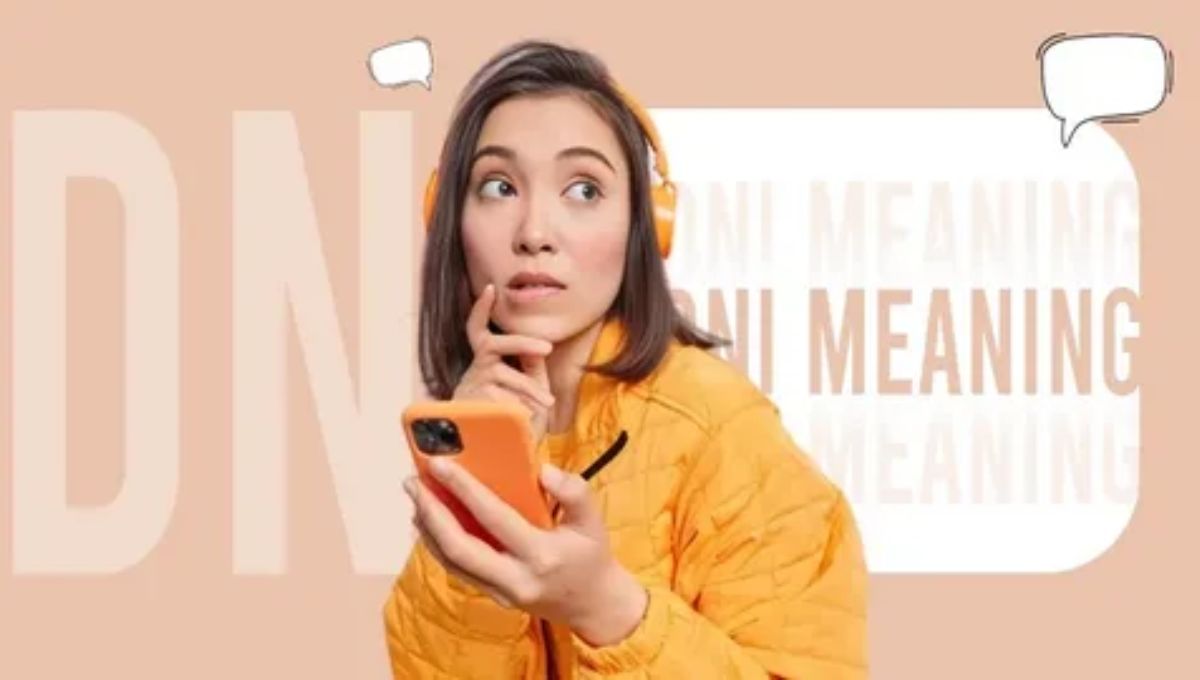
You’re scrolling through TikTok, and there it is again: “minors DNI.” Or maybe you spotted it in a Discord server’s rules, or tucked into someone’s Instagram bio right after a string of emojis. If you paused and thought, wait, what does that actually mean?, you’re in good company.
Internet slang moves fast, and DNI is one of those terms that’s everywhere online yet almost never explained.
Here’s the short version: DNI stands for “Do Not Interact.” It’s a boundary-setting phrase, not an insult, and once you understand how people use it, you’ll never squint at a bio again. This guide walks through the full DNI meaning in text, real examples from actual conversations, how tone changes its impact, and where it shows up across every major platform.
🧠 What Does DNI Mean in Text?
DNI stands for “Do Not Interact.” People use this acronym online to tell a specific group of people — or sometimes a specific individual — not to comment, message, follow, reply, or otherwise engage with their content.
It’s short, it’s blunt, and that’s exactly the point: online communication rewards speed, and spelling out “please don’t contact me if you fall into this category” in every bio just isn’t practical.
Here’s the thing about the DNI full form: it’s less a technical acronym and more a piece of social etiquette that evolved because platforms got crowded. Think of it as a digital “keep out” sign, except instead of guarding a yard, it’s guarding someone’s mentions, comments, or DMs. A typical example looks like this:
“if you’re rude, dni 🚫”
That single line does the work of an entire paragraph. It tells anyone scrolling past exactly what disqualifies them from a friendly interaction — before a single message gets sent.
In short: DNI = Do Not Interact = a quick, public way of setting a boundary.
You’ll also see people describe DNI as an internet slang term, a texting abbreviation, or a chat abbreviation — all accurate, since it crosses over between casual texting, bios, and community rule-setting depending on where it shows up.
💬 Examples of DNI in Conversation
Seeing DNI meaning in text explained is one thing. Seeing it in the wild makes it click faster. Here’s a spread of realistic examples, ranging from playful to firm:
- Bio warning: “minors dni 🚫” — a clear line: people under 18 shouldn’t engage with this content.
- Opinion-based: “if you support hate, dni” — filtering out people whose views clash with the poster’s values.
- Discord server rule: “spammers dni” — a moderation tool baked right into the community guidelines.
- Personal boundary: “ex friends dni” — a specific, sometimes painfully direct, request aimed at particular people.
- Group chat exchange:
- A: “who’s joining the call?”
- B: “trolls dni pls 😅”
- Sensitive content warning: “heavy topic ahead, dni if uncomfortable” — functioning almost like a content warning or disclaimer.
- Community space rule: “no negativity, dni if you can’t respect others” — setting expectations for the whole group, not just one person.
🕓 When to Use and When Not to Use DNI
Like most internet language, DNI works great in the right setting and falls flat — or comes across oddly — in the wrong one.
✅ When to Use DNI
DNI earns its keep in situations where you want to establish personal boundaries before a stranger even reaches out:
- Setting clear boundaries in a public bio
- Managing unwanted interactions on social media profiles
- Avoiding toxic behavior or repeated harassment
- Creating safer, more respectful online communities
- Filtering your audience so engagement stays relevant
❌ When Not to Use DNI
On the flip side, a few contexts make DNI feel out of place or even unprofessional:
- Professional emails or workplace chats
- Conversations with teachers, clients, or coworkers
- Casual texting between friends who already know each other
- Situations that genuinely call for a real conversation, not a warning label
- Formal or academic writing
🔄 Other Meanings of DNI in Text
Context does almost all the heavy lifting here. While “Do Not Interact” dominates on social media, DNI pops up with different meanings elsewhere:
| Context | Likely Meaning |
| Social media | Do Not Interact |
| Government / national security | Director of National Intelligence |
| Technology | Digital Network Interface |
| Business | Departmental Network Information |
🔄 Similar Slang Words or Alternatives
DNI isn’t the only phrase people reach for when setting online boundaries. Here are a few common alternatives, along with how they differ in tone and strength:
| Slang | Meaning | When It’s Used |
| DND | Do Not Disturb | Avoiding interruptions generally |
| No DM | No direct messages | Limiting private conversations specifically |
| BYI | Before You Interact | Sharing context or rules before engaging |
| Block | Prevent interaction | A stronger, platform-enforced action |
| Friends only | Restricted visibility | Limiting who can see or engage with content |
| Followers only | Restricted visibility | Similar to “friends only,” platform-specific |
| Leave me alone | Direct request | Blunt, unambiguous, less commonly written in bios |
🧾 Why People Use DNI in Texting & Social Media
Understanding why DNI caught on says a lot about how online culture has shifted. It’s not random slang — it solves real problems people run into daily on crowded platforms.
🛑 1. Setting Boundaries
At its core, DNI is about personal boundaries. Online spaces let anyone comment, reply, or message with almost no friction, and that openness can get overwhelming fast. DNI gives people a proactive way to set expectations before a conflict even starts, rather than reacting after something unpleasant happens.
🧠 2. Protecting Mental Health
Constant exposure to arguments, criticism, or toxic behavior wears people down. Many users build informal “DNI lists” specifically to protect their mental health and reduce stress. For creators dealing with high engagement, this isn’t optional — it’s a form of digital self-care that keeps a platform usable instead of exhausting.
📱 3. Controlling Audience
Creators, educators, and niche community leaders often want a specific audience engaging with their posts. A support account for students, for example, might write “advertisers DNI” to keep replies focused on the people the content is actually meant for. This kind of audience control keeps conversations on-topic and useful.
🧑🤝🧑 4. Building Safe Communities
Community rules built around DNI phrasing help set the tone for an entire space. When moderators post something like “trolls DNI” in a Discord server’s welcome channel, it signals — right from the start — what behavior won’t be tolerated. Over time, that consistency builds trust between members.
⚡ 5. Fast Communication
Nobody wants to type out “please do not comment on my posts or send me direct messages if you disagree with this” every single time. DNI compresses that entire idea into three letters. On platforms with character limits or space-constrained bios, that efficiency matters.
🧠 Is DNI Rude or Respectful?
This is genuinely one of the most common questions people ask, and the honest answer is: it depends entirely on wording and tone.
😊 Respectful
Respectful DNI statements target behavior, not identity, and often include a softening word like “please.”
“Please DNI if you enjoy spreading misinformation.”
This version explains the reasoning and stays focused on the action, not the person.
😐 Neutral
Neutral wording is short, direct, and free of emotional language:
“Minors DNI.”
No judgment attached — just a clear, practical statement of who shouldn’t engage.
😠 Harsh
Harsh DNI phrasing tends to include insults or blanket accusations:
“If you don’t agree with me, DNI.”
This version can feel dismissive or confrontational, and it’s the kind of wording that gives DNI a reputation for being unfriendly, even though the acronym itself isn’t inherently rude.
Takeaway:
the acronym is neutral. The person writing it decides whether it lands as protective or prickly.
What Does DNI Mean?
DNI Slang Meaning
As a piece of internet slang, DNI functions like a warning label. Instead of writing:
“Please don’t comment, message, or interact with me if you belong to this group,”
people simply write:
“DNI.”
Short, fast, and instantly understood by anyone familiar with the term — which, at this point, includes most active social media users.
What Does DNI Mean in Chat?
In actual chat conversations, DNI usually translates to one of these:
- Don’t message me
- Don’t reply to me
- Don’t engage with this discussion
- Don’t participate in this conversation
Example:
A: “Why is everyone arguing in the comments?” B: “The creator literally said ‘DNI if you’re here to start drama.'” A: “Makes sense.”
DNI Meaning on Snapchat
DNI shows up less often on Snapchat compared to TikTok or Instagram, but it does appear in bios, public stories, and community posts. On this platform, it generally means: “Please don’t add me or message me if you meet certain criteria.”
“DNI if you’re just trying to start drama.”
DNI Meaning on Instagram
Instagram bios are a common home for DNI. A few typical examples:
- “DNI if you’re rude.”
- “DNI if you’re under 16.”
- “Spam accounts DNI.”
Since Instagram bios sit right at the top of a profile, this placement makes DNI one of the first things a visitor reads — which is exactly the point.
DNI Meaning on TikTok

TikTok might be the platform where DNI meaning gets the most daily use. Creators frequently write things like:
- “DNI if you support hate.”
- “DNI if you’re here to bully.”
- “DNI if you’re not respecting boundaries.”
DNI Meaning on WhatsApp
DNI rarely appears on WhatsApp, since the app leans more toward private, one-on-one messaging rather than public bios. When it does show up, it usually means: “Please don’t contact me unless it’s necessary,” or simply, “I don’t want interaction from certain people.”
Is DNI an Acronym, Short Form, or Something Else?
| Type | Does DNI Fit? |
| Acronym | Yes |
| Short form | Yes |
| Phonetic spelling | No |
| Typo-turned-slang | No |
Tone and Context Variations
The meaning of DNI barely changes across contexts, but the tone shifts a lot depending on how — and why — someone uses it.
Funny Tone
A: “I put pineapple on pizza.” B: “Pineapple pizza lovers DNI 😂”
Clearly a joke, not an actual boundary.
Sarcastic Tone
A: “I accidentally deleted my whole project.” B: “People who don’t save their work DNI.”
Frustration disguised as humor — a common combo in casual chats.
Romantic Tone
A: “I miss my boyfriend.” B: “Happy couples DNI 😅”
Playful jealousy, nothing serious behind it.
Angry Tone
A: “Stop commenting on my posts.” B: “Fine.” A: “Seriously, DNI from now on.”
This version signals a genuine, no-longer-negotiable boundary.
Playful Tone
A: “I beat your score again.” B: “Winners DNI 😆”
Lighthearted teasing between people who already know each other well.
Real Chat Examples of DNI
To really nail down DNI meaning in text, here are fifteen quick, realistic exchanges pulled from the kinds of conversations people actually have online.
Example 1
A: “Why is your bio so long?” B: “It includes my DNI list.” A: “Oh, got it.”
Example 2
A: “What does ‘Minors DNI’ mean?” B: “It means people under 18 shouldn’t interact.” A: “Thanks.”
Example 3
A: “Did you see their TikTok?” B: “Yeah, they put ‘Drama accounts DNI.'” A: “Smart move.”
Example 4
A: “Why won’t they respond?” B: “You’re on their DNI list.” A: “Oh.”
Example 5
A: “What’s your biggest online pet peeve?” B: “People ignoring DNI requests.” A: “Same.”
Example 6
A: “Why is everyone talking about DNI?” B: “It’s common in fandom communities.” A: “Makes sense.”
Example 7
A: “I commented anyway.” B: “Their bio literally says DNI.” A: “Oops.”
Example 8
A: “Is DNI rude?” B: “Not necessarily — depends how it’s written.” A: “Good to know.”
Example 9
A: “Why did they block me?” B: “You ignored their DNI.” A: “That explains it.”
Example 10
A: “What’s your rule?” B: “Trolls DNI.” A: “Fair.”
Example 11
A: “Can I follow them?” B: “Check their DNI first.” A: “Will do.”
Example 12
A: “I love fandom culture.” B: “Then you’ve definitely seen DNI lists.” A: “Everywhere.”
Example 13
A: “Why are comments disabled?” B: “Too many people ignored the DNI.” A: “Wow.”
Example 14
A: “Is DNI only on TikTok?” B: “Nope — it’s all over social media.” A: “Interesting.”
Example 15
A: “What’s the opposite of DNI?” B: “Probably open interaction.” A: “True.”
Grammar and Language Role
Part of Speech
DNI functions as an abbreviation, standing in for a short imperative phrase (“do not interact”).
Sentence Position
It’s flexible and shows up:
- At the beginning: “DNI if you’re here to argue.”
- In the middle: “Troll accounts DNI, please.”
- At the end: “Please respect my boundaries, DNI.”
Does It Replace a Full Sentence?
Yes. Instead of writing “Please do not interact with me,” people simply write “DNI.” It’s a full command packed into three characters.
Tone Impact
Depending on wording, DNI can sound:
- Neutral
- Firm
- Protective
- Humorous
- Serious
Formal vs Informal Use
| Style | Appropriate? |
| Casual texting | Yes |
| Social media | Yes |
| TikTok | Yes |
| Yes | |
| Workplace emails | No |
| Academic writing | No |
How to Reply When Someone Says DNI
Funny Reply
- “Noted, I’ll keep scrolling 👋”
- “Mission understood.”
Serious Reply
- “I respect your boundaries.”
- “Understood, thanks for clarifying.”
Flirty Reply
(Only appropriate in clearly playful contexts)
- “Guess I’ll admire from afar then.”
- “Fair enough 😏”
Neutral Reply
- “Okay.”
- “Got it.”
Comparison Table
| Slang Term | Meaning | Usage Context | Tone | Popularity |
| DNI | Do Not Interact | Bios, profiles, communities | Firm | High |
| DNF | Did Not Finish | Gaming, books | Neutral | Medium |
| IDK | I Don’t Know | General texting | Casual | Very High |
| BYF | Before You Follow | Social media bios | Informative | Medium |
Who Uses This Term?
Age Group
DNI is most common among teens, Gen Z, and young adults — the demographics most active on TikTok, Discord, and fandom-driven communities.
Gen Z vs Millennials
Gen Z uses DNI far more frequently and casually. Millennials generally recognize the term but reach for it less often, often preferring fuller sentences when setting boundaries.
Region
DNI shows up globally, but it’s especially common in English-speaking online communities, including the United States, Canada, the United Kingdom, and Australia.
Platforms Where It’s Most Common
- TikTok
- Tumblr
- Discord
- X (formerly Twitter)
- Reddit communities
Origin and Internet Culture Insight
Possible Origin
DNI likely emerged from online forums and fandom spaces, where users needed a fast, standardized way to establish boundaries in busy comment sections.
TikTok Influence
TikTok’s short-form, high-volume content style accelerated DNI’s spread. Creators needed quick, effective ways to manage audience interactions without writing lengthy disclaimers.
Meme Culture Role
Over time, DNI drifted into meme territory too:
- “People who hate dogs DNI.”
- “Homework lovers DNI.”
Fast Typing Culture
Online users consistently favor short abbreviations over full sentences. DNI fits that culture perfectly — three letters instead of an entire warning paragraph.
Why People Say DNI on TikTok
TikTok creators lean on DNI to:
- Avoid unnecessary drama
- Set clear boundaries early
- Protect their personal space
- Filter their audience
- Build safer, more predictable communities
Is DNI Rude?
Most people use DNI as a boundary statement rather than a personal attack. That said, the wording surrounding it can occasionally come across harsher than intended — which is why tone matters so much here.
Should You Use DNI in School or the Office?
School
Generally fine in casual online communication among peers.
Workplace
Less appropriate. Professional settings call for clearer, more formal wording, such as “Please contact the appropriate department” or “Please direct inquiries elsewhere.”
Experience-Based Insight
Across TikTok, Instagram, Discord, and fandom spaces, DNI functions less like an attack and more like a digital boundary sign. Most people who use it are trying to manage their audience and protect their energy — not pick a fight. Treating it as a practical tool, rather than a personal slight, tends to make online spaces run smoother for everyone involved.
Summary
DNI stands for “Do Not Interact.” It’s an internet slang term and texting abbreviation widely used across TikTok, Instagram, Discord, Tumblr, and similar platforms. People rely on it to set boundaries, reduce unwanted interactions, and manage their communities more effectively.
Usage tips:
- Use DNI in casual online spaces.
- Keep your reasoning clear, not vague.
- Respond respectfully when someone else’s DNI applies to you.
Common mistakes to avoid:
- Assuming DNI is automatically an insult.
- Confusing it with unrelated slang like IDK or DNF.
- Ignoring a clearly stated DNI request.
FAQ
Is DNI the same as IDK?
DNI means “Do Not Interact,” while IDK means “I Don’t Know.” They’re unrelated in meaning and use.
Can adults use DNI?
While it’s more common among younger users, people of all ages use DNI to set online boundaries.
How do you respond to DNI?
A respectful response usually works best — something like “Understood,” “Got it,” or “I respect your boundaries.”
Why do people put DNI in their bio?
To set expectations upfront and control who engages with their content before any interaction happens.
Is DNI common on TikTok?
TikTok is one of the platforms where DNI shows up most frequently, often in bios and comment sections.
What does DNI stand for on social media?
DNI stands for “Do Not Interact” across nearly all social media contexts.
What is a DNI list?
A DNI list outlines specific groups, behaviors, or individuals a person doesn’t want interacting with their content.
Does DNI mean blocked?
DNI is a request or boundary statement — it doesn’t automatically mean someone has been blocked.
Why do fandoms use DNI?
Fandom communities often use DNI to reduce conflict, manage large audiences, and keep discussions focused and respectful.
Is DNI only for TikTok?
It’s also common on Instagram, Tumblr, Discord, Reddit, and X.
Can businesses use DNI?
Businesses typically rely on more formal, professional communication instead.
What does DNI stand for?
DNI stands for “Do Not Interact.”
What is DNI meaning Discord?
On Discord, DNI usually appears in server rules or user bios to prevent specific people from interacting within the community.
Where is DNI most used?
Most commonly on TikTok, Instagram, Discord, Tumblr, X, and Reddit.
Why do people use DNI?
To set boundaries, avoid negativity, protect their mental health, and control who engages with their online space.






1 thought on “What Does DNI Mean in Text? 🤔 A Simple Guide for Beginners (2026)”