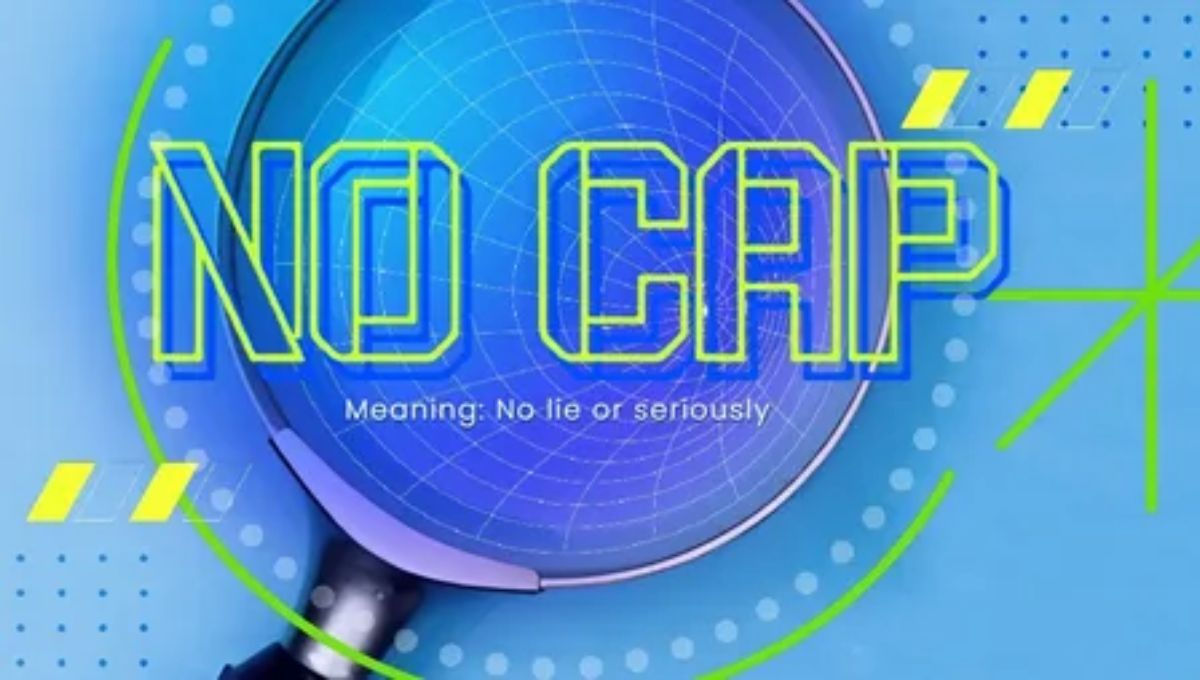
You’re scrolling through a group chat. Someone writes, “Best tacos of my life, no cap.” Do they mean it? Or are they pulling your leg?
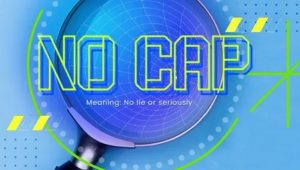
Relax. The no cap meaning is simple: “no lie” or “for real.” This guide covers the rest, including where the phrase came from, how to use it, and how to answer when someone shouts “cap!” at you.
Cap Slang Meaning – Quick Explanation
At its core, cap slang meaning boils down to one idea: a lie, an exaggeration, or something that isn’t true.
Flip it around and you get the no cap meaning. The speaker says they’re being honest, serious, and not stretching the truth. Dictionary.com defines “no cap” as slang for “no lie” or “for real,” often used to stress that someone isn’t exaggerating about something hard to believe. dictionary
Think of “cap” as a friendly lie detector. When you hear it, a tall tale just got flagged. When you hear “no cap,” the speaker swears the tale is true.
Simple Breakdown:
| Term | What it means |
| Cap | A lie, a false statement, or an exaggeration |
| No cap | No lie. “I’m being honest.” |
| Capping | Lying or exaggerating |
| That’s cap | “That’s not true.” |
Quick Examples:
- “You ran 10 miles before breakfast? That’s cap.”
- “This is the best food I’ve ever had, no cap.”
- “Stop capping, bro.”
What Does No Cap Mean in Texting?
In text message slang, “no cap” adds emphasis. The sender wants you to believe what they just said. It appears in group chats, DMs, and casual one-on-one messages.
No Cap in a Text Message
| Text | What it really says |
| “You have to try this restaurant, no cap.” | “I’m being honest. It’s that good.” |
| “No cap, I finished the whole project in a day.” | “I really finished it in a day.” |
| “I was nervous before the exam, no cap.” | “I truly was nervous.” |
TL;DR:
Meaning:
“No cap” = “No lie,” “For real,” or “I’m telling the truth.”
- No cap = no lie, for real
- Cap = a lie or exaggeration
- Capping = lying or exaggerating
- That’s cap = that’s not true
- It’s informal slang with roots in AAVE
- It can also literally mean “no limit”
Origin & Background
Slang rarely appears out of thin air. The no cap meaning has deep roots in African American Vernacular English (AAVE), also called African American English.
Merriam-Webster traces “no cap” to African American English slang that appeared by at least the early 2010s in lyrics from Atlanta hip-hop artists, and their popularity pushed it into the mainstream.
The dictionary also logs 2011 as the first known use of “no cap” in this sense. merriam-webstermerriam-webster
The word underneath it is older. In African American English, “cap” meant to boast, exaggerate, lie, or insult, with examples recorded in the mid-1900s. Linguists suspect the sense runs even older.
Then the rap world supercharged it. Atlanta rappers Future and Young Thug released a track called “No Cap” in 2017, which helped popularize the phrase. TikTok and Twitter carried it the rest of the way, along with memes and influencers. merriam-websterwiktionary
Here’s a quick snapshot of the slang origins timeline:
| Period | What happened | Source type |
| Early 1900s | “Cap” used in Black slang for bragging, exaggerating, lying | Dictionary.com |
| 1940s–1960s | “To cap” means to outdo; “capping” becomes ritual insult play | Dictionary.com |
| 2011 | First known use of “no cap” in its modern sense | Merriam-Webster |
| 2017 | Future and Young Thug release “No Cap” | Wiktionary |
| Late 2010s–2020s | Mainstream spread through social media | Merriam-Webster |
Real-Life Conversations
Definitions only go so far. Slang in casual conversations clicks once you watch it in action. Here are three everyday scenes.
WhatsApp Chat
Person A: I finished the whole project in one hour.
Person B: Bro… that’s cap.
Person A: I’m serious, no cap.
Notice the rhythm. Person B doubts. Person A doubles down with “no cap.” The phrase works as a verbal handshake: trust me on this one.
Instagram DMs
Person A: This is the best burger in the city.
Person B: No cap?
Person A: No cap, you have to try it.
Here “no cap?” becomes a question. It means “Are you serious?” The reply repeats the phrase to confirm. Short. Punchy. Perfect for DMs.
TikTok Comments
User 1: This workout changed my life.
User 2: No cap, same here.
User 3: Y’all capping.
Three people, three tones. One shares sincerity. One agrees. One throws playful shade. That’s no cap on TikTok in a nutshell: fast, flexible, and a little cheeky.
Emotional & Psychological Meaning
Why does this tiny phrase stick? Because people crave honesty, especially online. Feeds overflow with filters, staged photos, and big claims. “No cap” cuts through the noise and says, I’m being real with you.
On the flip side, “that’s cap” signals skepticism. It lets you question a claim without a harsh accusation. Calling someone a “liar” lands like a slap. Saying “cap” lands more like a nudge.
Here’s what each phrase signals in practice:
- “That’s cap”: doubt, teasing, or a gentle call-out
- “No cap”: sincerity, authenticity, and confidence
- “Capping”: an ongoing pattern of exaggeration
- “Stop capping”: a request for honesty
Usage in Different Contexts
Slang changes outfits depending on where it shows up. The same phrase can sound charming in a group chat and bizarre in a board meeting.
1. Social Media
This is where “cap” thrives. Think captions, comments, and replies.
- Comments: “That’s cap.”
- Captions: “Best day ever, no cap.”
- Replies: “Stop capping.”
On social media slang feeds, brevity wins. Three letters beat a full sentence every time.
2. Friends & Relationships
Among friends, the phrase turns playful. “You said you’d wake up early? Cap.” In a relationship, it can turn tender: “I miss you, no cap.”
Illustrative case study: Picture a couple who’ve been dating a year. The boyfriend texts, “Finished the whole kitchen renovation plan in one night, no cap.”
His partner replies with a 🧢 emoji and a laughing face. He sends a photo of the finished plan. She types, “Okay, you win.” The lesson? Among people who know each other, “cap” works as banter. The sincerity gets proven with evidence.
Even in a marriage, the phrase can pop up as an inside joke. Spouses who text each other all day often borrow Gen Z slang for fun. Just keep the tone warm.
3. Work or Professional Settings
Here you need care. “That report is cap” sounds dismissive in a formal meeting. Try this instead: “I think this report may contain some inaccuracies.”
Illustrative case study: Imagine a design firm that films an HGTV show-style renovation series.
The interior designer and the TV host are also business partners. Backstage, they joke about cost estimates: “Forty-eight hours for that tile job? Cap.”
On camera with clients, they switch registers: “We’d like to double-check that timeline.” Same people, same topic, different audience. Smart communicators read the room.
Younger teams may use casual slang in chat channels. Still, a good rule holds: if you wouldn’t say “dude” in that message, skip “cap.”
4. Casual vs Serious Tone
- Casual: “That’s cap 😂”
- Serious: Skip it.
Slang shines in relaxed spaces. When stakes rise, switch to plain language. Serious moments deserve words like “honestly,” “truthfully,” and “seriously.”
Common Misunderstandings
Even a simple word trips people up. Watch for these four slip-ups.
1. Thinking It Means “Cool”
Nope. Saying “that outfit is cap” doesn’t compliment anyone. It suggests the outfit looks fake or exaggerated. If you want to say something is great, say it’s “fire.” Then add “no cap” for emphasis.
2. Overusing It
Drop “cap” into every sentence and you’ll sound like a parent trying too hard at a school dance. Sprinkle. Don’t dump.
3. Using It in Formal Situations
Job interviews, school essays, and client emails don’t need slang. In those spaces, “no cap” can read as immature or careless.
4. Misreading Tone
“That’s cap” can sound like a joke or an insult. Context decides. A smile, an emoji, or a close friendship softens it. A cold text from a stranger doesn’t.
Comparison Table
| Term | Meaning | Tone | Example |
| Cap | Lie or false statement | Casual, teasing | “That’s cap.” |
| No cap | Truth, no lie | Confident | “I love this, no cap.” |
| Facts | Agreement, truth | Supportive | “That’s facts.” |
| BS | Nonsense or a lie | Harsh | “That’s BS.” |
| Legit | Real, genuine | Neutral | “That’s legit.” |
| Honestly | Truthfully | Neutral to formal | “Honestly, I loved it.” |
From a Girl
What does no cap mean from a girl? The same thing it means from anyone: “no lie” or “for real.” The phrase carries no secret code tied to gender.
What changes is context. If a girl you’re texting writes, “I had a great time tonight, no cap,” she’s stressing sincerity.
If she writes, “You’re so funny, cap,” she’s likely teasing. Read her tone, her emoji, and your history together. Those clues matter far more than who typed the words.
From a Guy
The same rule applies when a guy uses it. “I’m nervous about this date, no cap” signals honesty. “You really caught a fish that big? Cap.” signals playful doubt.
In a new relationship, “no cap” often softens vulnerable moments by adding a casual, confident layer. So when you’re wondering what no cap means from a guy, check the tone and the situation. The words stay constant.
Read This Blog…Ion Meaning Explained With Simple Definition and Real Examples
Variations / Types of “Cap”
The slang spawned a whole cast of spin-offs. Some are well documented. Others are playful coinages that pop up in memes and chats. Use them loosely.
| Variation | Meaning | Example |
| No cap | I’m telling the truth | “That movie was amazing, no cap.” |
| Big cap | An obvious lie | “You met a celebrity? Big cap.” |
| Full cap | Completely false | “That story is full cap.” |
| Half cap | Partly true, partly exaggerated | “That’s half cap.” |
| Stop capping | Stop lying | “Bro, stop capping.” |
| He’s capping | He’s lying | “Don’t believe him. He’s capping.” |
| Low-key no cap | Quietly honest | “Low-key no cap, I liked it.” |
| No cap fr | Seriously, no lie (“fr” = for real) | “No cap fr, I was scared.” |
| Capper | Someone who lies often | “He’s such a capper.” |
| Cap alert / cap detector | Playful warning that a fib is near | “My cap detector is going off.” |
How to Respond When Someone Uses “Cap”
Someone calls “cap” on your story. Now what? Pick a response that fits the mood.
Casual Replies
- “Nah, it’s true.”
- “Believe it or not.”
- “I swear, no cap.”
Funny Replies
- “Cap? I don’t even own a hat.”
- “Lie detector says… you’re wrong.”
- “Certified no cap moment.”
Mature / Confident Replies
- “I get why it sounds that way, but I’m serious.”
- “I’m being honest here.”
- “You can verify it if you want.”
Private / Respectful Replies
- “I understand why you’d doubt it.”
- “Let me explain properly.”
- “I’m not exaggerating.”
Regional & Cultural Usage
Slang travels faster than any airplane. Still, it lands differently from place to place.
Western Culture
In the United States and the United Kingdom, people know “cap” and “no cap” well, especially through music and online video.
Younger speakers use them most. Older adults often recognize the words from their kids or from pop culture.
Asian Culture
Across Asia, many English learners meet the phrase online. They pick it up from global music, gaming, and short video. Offline, local languages usually carry the load, so use in everyday speech varies a lot.
Middle Eastern Culture
In English-speaking circles and mixed-language chats across the region, some users know “cap.” It tends to appear in online spaces rather than in everyday Arabic conversation.
Global Internet Usage
Online, the term crosses borders with ease. Wiktionary even lists a Swedish entry borrowed from English. That’s how internet language trends work. A phrase born in Atlanta can end up in a group chat in Stockholm.
Read This Blog…Ion Meaning Explained With Simple Definition and Real Examples
Deeper Linguistic Evolution: From 1800s Jousting to Digital Slang
Forget the hat theory. The real story involves verbal sparring. According to the public radio show A Way with Words, capping in the 1800s meant winning by telling a better joke than your rival.
By the 1940s, Black Americans used “to cap” while trading increasingly outrageous insults in the game known as the dozens, and the verb drifted toward meaning “stretching the truth.” You can read the full explanation at Wayword Radio. waywordradiowaywordradio
The dictionary evidence lines up. Green’s Dictionary of Slang traces the verb to an early nineteenth-century dialect sense of “to surpass” or “to outdo,” then lists later senses such as making a smart rejoinder, lying, and insulting. You can browse that entry at Green’s Dictionary of Slang. greensdictofslang
Here’s the story as a staircase:
- Early 1800s: “Cap” means to top or outdo someone.
- Early 1900s: In Black slang, it also means to brag, exaggerate, or lie.
- 1940s–1960s: Capping becomes a game of exaggerated insults, tied to the dozens.
- Hip-hop era: The word shows up in rap lyrics. Know Your Meme credits “high cappin’” in a 1989 Willie D track as an early example. Some online timelines also name Too Short, UGK, and Chief Keef. Dictionaries haven’t confirmed those specific claims, so treat them as folklore until a primary source appears. knowyourmeme
- 2011 and beyond: “No cap” gets its first dictionary record, then explodes in the late 2010s.
Modern Slang Family Matrix
Think of “cap” as the head of a family. Every relative has a job.
| Term | Job | Real-world example |
| Cap | Direct accusation of a lie | “He said he owns a Ferrari? That’s cap.” |
| Capping | Active verb for lying or exaggerating | “Why are you capping about your grades?” |
| Capper | The person who does it | “Everyone knows he’s a capper.” |
| No cap | Assertion of truth | “No cap, that was the hardest test ever.” |
| Cap alert / cap detector | Playful warning | “My cap detector is going off right now.” |
What Does “That’s Cap” Mean?
That’s cap meaning: “That’s not true.” Someone made a claim. You doubt it. You reply with “that’s cap.” Simple.
Tone matters. Said with a grin, it’s friendly teasing. Said flatly to someone you don’t know, it can sound like an accusation. So match your delivery to your audience.
What Does “Stop the Cap” Mean?
“Stop the cap” (and its cousin “stop capping”) asks someone to quit lying or exaggerating. Picture a friend telling you they bench-pressed a small car. You grin and say, “Stop the cap.”
What Does “Big Cap” Mean?
“Big cap” means a whopper. It’s an obvious, over-the-top lie. If someone says their dog speaks three languages, you might reply, “Big cap.”
How to Use Cap in a Sentence
Learning how to use cap correctly takes about five minutes. Plug it into a doubtful moment.
Examples of Cap in Everyday Conversations
- “He said he met the president? Cap.”
- “Your story keeps growing. That’s cap.”
- “Cap. You didn’t wake up at 5 a.m.”
- “Stop capping, you hate mornings.”
- “Everyone in this thread is capping.”
Examples of No Cap in Everyday Conversations
- “No cap, that concert changed my life.”
- “I studied all night, no cap.”
- “This is the best pizza in town, no cap.”
- “No cap, you did a great job.”
- “I’m nervous, no cap.”
How to Reply to “That’s Cap”
You’ll get called out eventually. Here’s how to handle it with style.
Funny Replies
- “Cap? I’m bareheaded and honest.”
- “Check the receipts. I’ll wait.”
Serious Replies
- “I’m telling the truth.”
- “I wouldn’t joke about this.”
Calm Ways to Defend Yourself
- “I get why it sounds wild. Here’s what happened.”
- “I can show you the photo if you’d like.”
Is Cap Considered AAVE Slang?
Yes. Both Merriam-Webster and Dictionary.com place the term’s roots in African American English. Calling it plain “Gen Z slang” erases that history. A better description: Black linguistic innovation that went global.
Where Did the Slang Term Cap Originate?
It started as a verb in Black communities. Dictionary.com notes the sense of boasting, exaggerating, or lying dates to the early 1900s, with a 1940s “surpass” meaning recorded in Green’s Dictionary of Slang.
The jousting-style insult games of the dozens then pushed “cap” toward “exaggerate.” dictionary
How Cap Became Popular in Modern Slang
Music did the heavy lifting. Southern hip-hop kept the word alive. Then Atlanta rap’s national moment made “no cap” a catchphrase. Short-form video apps gave it rocket fuel. By the 2020s, grandparents were asking, “What’s cap?”
Read This Blog…What Does WH Mean in Text Messages Today? The Complete 2026 Guide 🤔💬
Cap vs. Lie vs. BS: What’s the Difference?
| Word | Strength | Vibe | Best for |
| Cap | Mild to medium | Playful, modern | Friends, social media |
| Lie | Strong | Serious, direct | Any setting where accusation is intended |
| BS | Strong | Rude, blunt | Venting, not polite company |
Can Cap Be Used as a Verb or a Noun?
Absolutely. It’s flexible.
| Part of speech | Example |
| Verb | “Stop capping.” |
| Noun | “That’s a cap.” |
| Adjective | “That story is cap.” |
| Interjection | “Cap!” |
| Person (noun) | “He’s a capper.” |
What Does the Cap Emoji 🧢 Mean in Text?
The 🧢 emoji stands in for “cap,” meaning a lie. Send it under a wild claim and you’ve called the bluff without typing a word. Dictionary.com notes people sometimes write “no cap” in emoji as 🚫🧢 or 🙅🏽🧢. dictionary
Context still rules. Sometimes 🧢 simply means a hat. A baseball fan posting a team photo probably isn’t accusing anyone of lying. Scan the message around the emoji before you decide.
Pragmatic Irony & Digital Usage Patterns
Here’s a twist. People often attach “no cap” to claims that are obviously exaggerated. “I waited a million years, no cap.”
No one waited a million years. Merriam-Webster points out that statements qualified by “no cap” are frequently, and purposely, exaggerated. merriam-webster
Language nerds call this pragmatic irony. The speaker uses hyperbole for fun and adds “no cap” to signal real feeling underneath. The listener understands the emotion even when the facts stretch. It’s rhetorical exaggeration with a wink.
How Is No Cap Used on Social Media?
On social platforms, people use “no cap” to sound direct and authentic. You’ll spot it in captions, comments, replies, and live streams.
Example: a food photo captioned “Best tacos in town, no cap.” The poster believes the tacos deserve the praise.
No Cap on TikTok, Instagram, and Snapchat
Each platform gives the phrase a slightly different flavor.
- TikTok: voiceovers and comments, often with humor
- Instagram: captions and DMs, usually with photos
- Snapchat: quick chats and stories
- X (Twitter): short opinions and tweets
- YouTube: comment-section reactions
- Facebook: posts and replies, sometimes from older users
- Memes: punchlines that twist the phrase
Example captions:
- “This outfit looks amazing, no cap.”
- “No cap, that video made me laugh.”
- “This game is difficult, no cap.”
No Cap Examples in Text and Conversation
Here’s a bank of ready-to-use lines.
- “That movie was incredible, no cap.”
- “No cap, you did a great job.”
- “This is the best burger in town, no cap.”
- “I was nervous before the exam, no cap.”
- “No cap, I didn’t expect him to win.”
- “You can trust me on this, no cap.”
- “I love this song, no cap.”
- “No cap, I miss you already.”
Illustrative case study: a marriage text thread. A couple, married six years, swap messages during a home renovation.
She writes: “The contractor says three weeks. I say six. Cap?” He replies: “Three weeks, no cap. He’s done this fifty times.” She sends a thumbs-up. Three weeks later, the kitchen is done.
Their shared slang turns a stressful project into a small joke. That’s the charm of the phrase. It lowers the temperature.
What Does Cap Mean in Slang?
In modern slang, “cap” means a lie, an exaggeration, or a false claim. Say “that’s cap” and you’re saying “that’s not true.” Say “capping” and you’re saying someone’s stretching the facts.
Common Cap Expressions
| Expression | Meaning |
| “That’s cap.” | That’s a lie. |
| “Stop capping.” | Stop lying or exaggerating. |
| “You’re capping.” | You’re not telling the truth. |
| “No cap.” | I’m telling the truth. |
No Cap vs. Cap: What’s the Difference?
The easiest test is truth versus exaggeration.
| Cap | No cap | |
| Meaning | Lie or exaggeration | Truth or sincerity |
| Used to | Call out someone | Vouch for yourself |
| Typical tone | Skeptical | Confident |
| Example | “You ran a marathon? Cap.” | “I ran a marathon, no cap.” |
Why Does Cap Mean Lie?
Here’s the logic. “Cap” once meant to top someone. In verbal contests, topping a story meant telling a bigger one.
Bigger stories drift away from the truth. So the verb slid from “outdo” to “exaggerate” to “lie.” Dictionary.com ties the slang to the idea of a “top” or “upper limit.” dictionary
What about the hat theory? Many sites claim “no cap” means you aren’t wearing a hat. Others point to dental caps. Neither idea has solid historical backing. Stick with the documented story.
Is No Cap Formal or Informal? ✍️
Informal. Full stop. It works beautifully in relaxed settings and badly in stiff ones.
| Setting | Okay to use? |
| Texts with friends | ✅ Yes |
| Social media captions | ✅ Yes |
| Group chats | ✅ Yes |
| School essays | ❌ No |
| Business emails | ❌ No |
| Job interviews | ❌ No |
When Should You Use No Cap?
Use it when you want to emphasize something you truly believe. For example: “No cap, this is the best meal I’ve had all month.” If you need a formal swap, try “honestly,” “truthfully,” “genuinely,” or “seriously.”
Talking With Teens About Slang
Parents often hear teen slang and panic. Don’t. Most phrases like “no cap” are harmless. Still, a calm chat about respectful communication helps.
Ask what words their friends use. Share the odd phrase you used as a kid. Talk about how smartphone communication and smartwatch communication can blur tone.
A few conversation starters:
- “What’s a new word you and your friends use right now?”
- “Are there emojis I use that I should retire?”
- “How do you decide what’s okay to say online?”
Can No Cap Be Used at the Beginning or End of a Sentence?
Yes. Both positions work.
- Beginning: “No cap, this is my favorite game.”
- End: “This is my favorite game, no cap.”
Grammar fans have a name for this. “No cap” acts as a sentence disjunct, an adverbial modifier that comments on the whole statement instead of one word inside it.
Merriam-Webster notes it can sit at the end of a statement or the beginning. Choose the spot that fits your rhythm. Starting with it adds drama. Ending with it adds a mic-drop. merriam-webster
Does No Cap Have a Literal Meaning?
It does. In standard English, a “cap” can mean a maximum limit. So “no cap” can mean “no limit.” Dictionary.com notes this sense often refers to prices or money. dictionary
Examples:
- “There’s no cap on how many people can enter.”
- “Retirement accounts like this have no cap on withdrawals.”
Illustrative case study: A TV host on a home-renovation show announces, “Our client set no cap on the budget.”
Viewers hear “unlimited money.” A teenager at home hears “no lie” and giggles. The designer, an interior designer with a straight face,
clarifies: “She means there’s no spending limit.” Context solves the puzzle every time. If money, entries, or limits appear nearby, think “no limit.” If someone’s boasting or storytelling, think “no lie.”
Is No Cap an Acronym or Abbreviation?
No. It isn’t an acronym like LOL or BTW. It’s two ordinary words that took on a special slang meaning together. Nothing is shortened. “Fr” (for real) is an abbreviation, but “no cap” stands on its own.
Is No Cap Still Used Today?
Yes. Dictionaries still track it, and fresh examples keep appearing online. Merriam-Webster cites 2024 posts on Threads, Bluesky, and X. That said, slang ages fast. Younger speakers may swap in newer expressions. Older speakers may adopt “no cap” just as it fades. Both can happen at once. merriam-webster
Safe bet: people will still recognize it. Whether they still use it depends on age, community, and platform.
Conclusion
The no cap meaning is refreshingly simple: “no lie,” “for real,” or “I’m telling the truth.” Its sidekick “cap” means a lie or exaggeration.
Together they form a handy pair for casual communication. The story behind them is richer. It runs from nineteenth-century verbal jousting, through the dozens, into hip-hop, and onto your phone screen.
Use the phrase with friends. Skip it in formal settings. Credit the culture it came from. And next time someone says “that’s cap,” you’ll know exactly how to answer.
Frequently Asked Questions
Can I use “cap” in formal situations?
It’s informal slang. In formal writing or professional settings, use “honestly,” “truthfully,” or “that’s inaccurate.”
Why do people say “no cap”?
To stress they’re being honest. It adds sincerity and emphasis to a statement, especially in texts and social posts.
Is “cap” only used by young people?
Mostly, yes. Teens and young adults use it most. Still, it’s spreading to older groups through social media and pop culture.
What does cap mean in slang?
It means a lie, an exaggeration, or something untrue. “That’s cap” means “that’s not true.”
What does capping mean?
Capping means lying or exaggerating. “Stop capping” asks someone to tell the truth.
Is no cap a bad word?
It isn’t a swear word. It’s casual slang that suits friendly chats better than formal writing.
Where did no cap come from?
It comes from African American English. Merriam-Webster points to Atlanta hip-hop in the early 2010s, and the root word “cap” is much older.
Is no cap formal or informal?
Informal. Use it with friends and online. Avoid it in essays, business emails, and interviews.
Can no cap mean no limit?
When “cap” means a maximum, “no cap” means “no limit.” Context tells you which meaning applies.
Is no cap an acronym?
It’s a slang phrase made of two regular words. It isn’t an abbreviation.





1 thought on “No Cap Meaning: What It Really Means in Texts, Slang, and Real Life (2026 Guide)”