You’re about to hit send. The email looks great until you spot the last line. Yep, it says “I look forward to it” again. That’s the fourth time today.
Don’t worry. This guide hands you 50+ other ways to say “I look forward to it”, sorted by tone and situation. You’ll find formal lines for your boss and playful ones for your boyfriend. Pick one, paste it in, and move on with your day.
Quick Answer
Need a fast swap? Try “I’m excited about it,” “I can’t wait,” “I’m eager to,” “I appreciate the opportunity,” or “I’m anticipating it.” The best pick depends on who reads your message. Formal readers like polished lines. Friends like short, warm ones.
What Does “I Look Forward to It” Mean?
“I look forward to it” means you feel positive about something coming up. It might be a meeting, a party, or a reply. The phrase signals anticipation. It also signals good manners.
Think of it as a verbal handshake. You show interest without gushing. That’s why people use it in business emails, cover letters, and invitations. According to wikiHow’s guide to the phrase, it works for any future event you feel pleased about.
Read This Blog…No Cap Meaning: What It Really Means in Texts, Slang, and Real Life (2026 Guide)
When People Commonly Use This Phrase
You’ll see it in several places:
- Closing a professional email
- Confirming a meeting
- Accepting an invitation
- Waiting on a reply
- Following up after a job interview
- Answering customer service messages
Is It Always Appropriate?
No. It fits most settings, but not all. Among close friends it can sound stiff. In a heated negotiation it can sound pushy. When someone shares bad news, it can sound tone-deaf. Read the room first.
Is “I Look Forward to It” Grammatically Correct?
Yes. It’s correct English. Here’s the catch, though. The word “to” acts as a preposition in this phrase. A preposition needs a noun or an -ing verb after it.
| Correct | Incorrect |
| I look forward to seeing you. | I look forward to see you. |
| I look forward to the meeting. | I look forward to meet you. |
| I look forward to hearing from you. | I look forward to hear from you. |
Is “I Look Forward to It” Professional or Too Formal?
It’s professional. It’s also a little formal. That makes it a safe bet for clients, recruiters, and managers. However, safe doesn’t mean memorable.
Here’s something few guides mention. Used at work, the phrase can nudge the reader. It suggests you expect something from them. A reply. A decision. A meeting. Usually that’s fine. Sometimes it feels like a gentle tap on the shoulder.
Example: “I look forward to your answer by Friday.” Friendly? Sure. But it also sounds like a deadline.
For softer wording, scroll to the low-pressure options below.
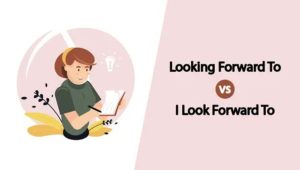
“I Look Forward to It” vs. “I’m Looking Forward to It”
Both are correct. The difference is feel.
| Version | Feel | Best for |
| I look forward to it | Formal, steady | Letters, cover letters, formal emails |
| I’m looking forward to it | Warm, present | Texts, team chats, friendly emails |
| I’ll be looking forward to it | Future-focused | Upcoming events with a set date |
“I Look Forward to It” vs. “I Look Forward to Hearing From You”
These two aren’t twins. “I look forward to it” points at a specific event. “I look forward to hearing from you” points at a reply.
The second one has a problem. It’s overused. As one AppSumo-style email guide argues, it’s vague and gives readers no clear action. Nothing is wrong with it. It just rarely gets answers.
Try this instead:
- “Could you send your feedback by Thursday?”
- “What are your thoughts?”
- “If I don’t hear back by [date], I’ll assume we’re ready to move forward.”
When Should You Use These Alternatives?
Swap the phrase when:
- You’ve used it twice already in one thread
- You write to a client, manager, or recruiter
- You want a warmer or firmer tone
- You need a stronger email closing
- You want to sound less robotic
Why You Need Alternatives to “I Look Forward to Speaking With You”
This sibling phrase has the same issue. Readers skim past it. Fresh wording keeps your message personal.
It also helps you adjust your tone for different audiences. A casual teammate and a senior executive need different words.
40+ Other Ways to Say “I Look Forward to It”
Here’s the big list. Each phrase has a tone and a best use.
| Alternative phrase | Tone | Best used for |
| I’m excited about it | Neutral | General conversations |
| I can’t wait | Casual | Friends and family |
| I’m eager to | Formal | Business emails |
| I’m thrilled | Casual | Exciting news |
| I eagerly await | Formal | Professional writing |
| I’m anticipating it | Formal | Workplace communication |
| I’m delighted | Formal | Invitations |
| I’m enthusiastic about | Professional | Projects |
| I welcome the opportunity | Formal | Business communication |
| I appreciate the opportunity | Professional | Client emails |
| I’m pleased to | Polished | Client communication |
| I’m keen to | Semi-formal | International English |
| I value the opportunity to | Formal | Leadership tone |
| I’m optimistic about | Balanced | Strategy talks |
| I look forward to connecting | Friendly | Networking |
| I look forward to continuing | Steady | Long-term projects |
More Ready-to-Use Phrases
- I’m grateful for the chance to…
- I look forward to the possibility of…
- I’m encouraged by our progress.
- I trust this will be productive.
- I’m confident this will add value.
- I appreciate your time and look forward to your response.
- I welcome your response at your convenience.
- I await your confirmation.
- I’m pleased to continue our work.
- I can’t wait to hear what you think.
Professional Ways to Say “I Look Forward to It”
Professional writing should sound clear, courteous, and confident. Keep it brief. A single sharp closing line beats a paragraph of fluff.
For Business Emails
Business emails reward directness. Try these:
- “I’m eager to move forward with this proposal.”
- “I appreciate your time and anticipate our next steps.”
- “I welcome the opportunity to discuss this further.”
For Clients
Clients want trust. Show them you value the relationship.
- “I’m looking forward to our collaboration.”
- “I’m pleased to continue working together.”
- “I appreciate your time and look forward to your feedback.”
For Coworkers
Colleagues don’t need a necktie. Keep it warm and efficient.
- “I’m excited to dig into this with you.”
- “I’m looking forward to our discussion on Tuesday.”
- “I’m eager to get started.”
For Job Interviews
After an interview, gratitude matters most. Here’s a three-sentence template:
Thank you for meeting with me today. I appreciate the opportunity to learn about the team. I’m excited about what we discussed and eager to hear about next steps.
Other strong lines:
- “I eagerly await your decision.”
- “I’m looking forward to discussing the role further.”
- “I’m grateful for the chance to interview.”
Formal, Semi-Formal, and Casual Alternatives
Tone is a sliding scale. Use this table to find your spot.
| Level | Phrases |
| Formal | I eagerly await your response. / I anticipate a productive discussion. / I welcome the chance to speak with you. |
| Semi-formal | I’m looking forward to our call. / I’m excited to connect. / I’m keen to learn more. |
| Casual | Can’t wait! / Counting down the days. / See you there! / I’m pumped. |
Alternatives for Emails, Meetings, Interviews, and Events
| Setting | Try this |
| “I look forward to hearing your thoughts.” | |
| Meeting | “I’m looking forward to our discussion on Monday.” |
| Interview | “I’m excited about the opportunity to talk with your team.” |
| Event | “I’ll be there with bells on.” |
| Networking | “I’d love to connect and hear your take.” |
| Project kickoff | “I’m eager to begin working with you.” |
Casual Ways to Say “Looking Forward to It”
Nobody texts a friend, “I eagerly anticipate our dinner.” That would be odd. Casual settings call for short, relaxed lines.
- Can’t wait!
- Counting down the days.
- Count me in.
- See you there!
- I’m on pins and needles.
- I’ll be there with bells on.
- It’s a date.
- I’ve circled it on my calendar!
A Quick Case Study: The Weekend Getaway
Maya and her boyfriend planned a beach trip. He texted, “Booked the cabin!” She could have written, “I look forward to it.”
she wrote, “Counting the hours!” He grinned for an hour. Small change. Big warmth.In a marriage or long relationship, playful wording keeps things fun. It shows you’re excited. It doesn’t sound like a business memo.
Enthusiastic Ways to Say You’re Looking Forward to Something
Sometimes “looking forward” feels too mild. Turn it up:
- I’m thrilled about this.
- I’m so pumped for Saturday.
- This is going to be great.
- I’m over the moon about it.
Polite and Low-Pressure Alternatives
Want a reply without tapping your foot? Soften the ask.
- “Whenever you have a moment, I’d love to hear your thoughts.”
- “No rush. I’m happy to chat when it suits you.”
- “I’m open to any feedback.”
The difference is simple. Expectation says, “I need this.” Invitation says, “I’d welcome this.” Invitations feel kinder.
Other Ways to Say “Looking Forward to Hearing From You”
This might be the most overused line in American email. It’s friendly. It’s also forgettable.
Better Closings That Get a Reply
- “I’d love to hear your feedback at your earliest convenience.”
- “Let me know if all of this sounds good to you.”
- “I’d love it if you could respond by [date], so we can keep things moving.”
- “If you’re not the right person for this, could you connect me with the right one?”
Friendly Sign-Offs When You Don’t Need a Reply
- Talk soon!
- Speak Monday!
- I hope to hear from you soon.
Other Ways to Say “I Look Forward to Meeting You,” “Seeing You,” and “Working With You”
| Original | Formal swap | Casual swap |
| I look forward to meeting you | I’m pleased to have the opportunity to meet you. | Can’t wait to meet you! |
| I look forward to seeing you | I anticipate seeing you on Friday. | See you soon! |
| I look forward to working with you | I’m eager to begin our collaboration. | Excited to team up! |
Synonyms for “Looking Forward to It”

Single words and short forms help too:
- Eager to
- Can’t wait
- Anticipating it
- Excited about it
- Awaiting
- Hoping for
What Does “I Look Forward to It Professionally” Mean?
The clunky phrase “i look forward to it professionally” simply means expressing polite anticipation in a respectful, business-ready way. You’re saying you’re ready. You’re also saying you’re glad. Nothing more is needed.
When to Use “I Look Forward to It Professionally”
Use it when you show interest in emails, proposals, interviews, or project talks. It suits moments where you agree to a plan. It also suits moments where you await a next step.
Pros and Cons of “I Look Forward to It Professionally”
| Pros | Cons |
| Polite and polished | Can feel repetitive |
| Works in formal writing | May lack emotional warmth |
| Shows a positive attitude | Can sound generic |
Tips for Choosing the Right Phrase
- Know your reader. A TV host booking a guest speaks differently than a lawyer.
- Match the formality. Formal for clients. Casual for peers.
- Consider your goal. Do you want a reply or just goodwill?
- Check the channel. Texts allow slang. Cover letters don’t.
- Read it aloud. If it sounds stiff, change it.
Advantages and Disadvantages of Using Alternatives
Advantages:
- Your writing feels fresh.
- You sound more personal.
- You avoid repetition.
- You can show specific emotions.
Disadvantages:
- Some options sound too casual for formal settings.
- Overly creative phrases may confuse readers.
- Forced enthusiasm can read as insincere.
Full List of Alternatives
Here’s a handy master list you can bookmark.
Anticipation: I’m anticipating it. / I eagerly await. / I anticipate a great discussion.
Excitement: I’m excited about it. / I’m thrilled. / I’m enthusiastic about this.
Gratitude: I appreciate the opportunity. / I’m grateful for the chance. / I value the opportunity to.
Willingness: I’m happy to. / I’m glad to. / I welcome the chance to.
Confidence: I’m confident this will work. / I’m optimistic about this. / I trust this will be productive.
Casual: Can’t wait! / Count me in. / See you there!
Examples of “I Look Forward to It” in Professional Emails
Case Study: The Interior Designer’s Pitch
Priya, an interior designer, wanted to pitch a kitchen renovation to a client. Her first draft ended with “I look forward to it.” It felt flat. She rewrote the closing:“I appreciate the chance to share my ideas.
I’m eager to walk you through the mood boards on Thursday.”The client replied within an hour. Why? The line named a day and a task. It gave a clear next step.
Case Study: The HGTV Show Pitch
A small production team pitched a renovation series to a network. The producer closed with:“Thank you for your time.
I’d love to hear your thoughts by Friday, so we can plan the pilot schedule.”An HGTV show pitch moves fast. A date helps everyone. So does a polite tone.
Case Study: The Business Partner Check-In
Two business partners were launching a café. One wrote, “I look forward to your feedback.” Silence followed.
The next email said: “What are your thoughts on the menu? Could you reply by Wednesday?” Answer arrived that afternoon.
Quick Template: Interview Thank-You
Dear Ms. Carter,
Thank you for speaking with me today. I enjoyed learning about the design team.
I’m excited about the opportunity and eager to hear about next steps.
Best regards,
Jordan
How to End an Email After Saying “I Look Forward to It”
Don’t stop abruptly. Pair the phrase with a courteous sign-off.
- “I look forward to it. Thank you for your time.”
- “Looking forward to it. Warm regards,”
- “I’m eager to begin. With appreciation,”
Bonus Section: Polite & Professional Email Closings
| Closing line | When to use it |
| Looking forward to your response | Standard follow-ups |
| With appreciation | After someone helps you |
| Thank you for your time and consideration | Job applications |
| I appreciate your attention to this matter | Formal requests |
| I look forward to next steps | Project updates |
| I look forward to hearing from you soon | Friendly inquiries |
| I welcome your response at your convenience | Low-pressure asks |
| I await your confirmation | Official approvals |
| I look forward to connecting soon | Networking |
How to Reply to “I Look Forward to It”
Someone says, “I look forward to it.” Now what? Mirror their warmth.
- Formal: “As do I. See you Thursday.”
- Friendly: “Me too! It’ll be great.”
- Casual: “Same here!”
- Short and sweet: “Likewise.”
Can You Say “I Look Forward to It” Without a Specific Event?
Yes. Sometimes it means a general anticipation. For example, “We’ll work together soon. I look forward to it.” The “it” stands for the whole collaboration.
Still, specifics help. “I look forward to our Tuesday call” beats a vague line. Specific wording adds clarity.
Common Mistakes to Avoid When Using This Phrase
- Repeating it three times in one email
- Writing “look forward to hear” instead of “hearing”
- Faking enthusiasm you don’t feel
- Using slang with senior executives
- Ending vaguely with no next step
- Forgetting the “to” (it’s “look forward to”)
How to Pick the Best Alternative
Ask three quick questions:
- Who’s reading? Boss, friend, or stranger?
- What’s my goal? Reply, goodwill, or confirmation?
- Where am I writing? Email, text, or letter?
Then match the answer:
Formal reader + need reply → “I’d appreciate your response by [date].”
Formal reader + goodwill → “I appreciate the opportunity.”
Friendly reader + excitement → “Can’t wait!”
Synonyms and Phrases for Different Audiences: Quick Comparison Table
| Phrase | Tone | Best for | Avoid in |
| I’m eager to proceed | Enthusiastic | Approvals, starts | Legal documents |
| I look forward to your response | Polite | Emails | Casual chats |
| I await further instructions | Formal | Workflows | Friendly messages |
| I look forward to collaborating | Cooperative | Teamwork | Solo reports |
| I anticipate our progress | Strategic | Reports | Informal talk |
| Can’t wait! | Casual | Friends, family | Executive emails |
Final Writing Tips
- Match the level of formality.
- Keep phrases short.
- Don’t force enthusiasm.
- Vary your closings in long threads.
- Warm phrases suit people. Firm phrases suit decisions.
- Read your message aloud.
- Add a date when you need a reply.
Conclusion
You now hold more than 50 other ways to say “I look forward to it.” Some are formal. Some are playful. All of them beat repeating yourself. Choose wisely, keep it genuine, and watch your emails land better.
Try one new phrase today. Then bookmark this page for next time. Your readers will notice the difference.
Read This Blog…What Does WH Mean in Text Messages Today? The Complete 2026 Guide 🤔💬
Frequently Asked Questions
Why should we use alternative expressions?
They keep your writing fresh. They also help you match tone to the audience.
Where can these phrases be used?
Use them in emails, meetings, interviews, texts, and cover letters.
How do these phrases improve communication?
They add clarity, warmth, and respect. Readers feel more engaged.
Can tone change meaning in professional writing?
A friendly tone invites replies. A stiff tone can feel distant.
Is “looking forward to it” too informal for work emails?
It’s polite and widely accepted. For a more formal feel, write “I look forward to it.”
Can I use “looking forward to it” at the end of an email?
It makes a pleasant closing. Add a sign-off like “Best regards” afterward.
What’s the most professional alternative to “looking forward to it”?
“I appreciate the opportunity” or “I eagerly anticipate” both work well.
Is “can’t wait” appropriate in professional settings?
Usually not. It’s casual. Use it with friendly colleagues only.
How do I avoid sounding repetitive when using this phrase often?
Rotate options from this list. Also add specifics like dates or topics.
Does “anticipating” sound cold or distant?
Sometimes. It’s formal and measured. Add a warm phrase if you want balance.
Can these phrases be used in spoken conversations too?
Casual ones fit best in speech. Formal ones suit presentations.
What’s the best option for networking or first meetings?
Try “I’d love to connect” or “I look forward to meeting you.” Both feel friendly and professional.
Are these phrases culturally universal?
Directness varies by culture. Spanish and French have their own equivalents, such as “tengo muchas ganas de” and “j’ai hâte de.”
Can overusing enthusiastic phrases seem insincere?
Too many exclamation points feel forced. Save energy for what matters.
Is it formal or casual?
It’s mostly formal. You can soften it with “I’m looking forward to it.”
Can I use it in emails and calls?
It works in both writing and speech.
What are some examples of alternatives?
“Excited to connect,” “Eager to speak with you,” and “Can’t wait to catch up.”
How do I choose the right alternative?
Consider the reader, your goal, and the channel. Then match the formality.
Does it leave a better impression?
Fresh wording feels thoughtful and sincere.
What can I say instead of “looking forward to it” in professional emails?
Try “I’m eager to,” “I welcome the opportunity,” or “I appreciate your time.”
Are casual alternatives better for friends?
Yes. “Can’t wait!” or “Count me in” feel warmer with friends and family.
How do I make my response sound more genuine?
Be specific. Mention what you’re excited about.
Can different phrases improve communication?
Varied wording clarifies intent and strengthens relationships.
What are other ways to say “I look forward” in an email?
“I look forward to hearing from you,” “I look forward to working with you,” or “I’m eager to discuss.”
What is another way to say “I look forward to meeting you” professionally?
Say “I’m pleased to have the opportunity to meet you.” Or “I’m eager to meet you.”
What is another way to say “looking forward to hearing from you”?
Try “I await your response” or “I hope to hear from you soon.”
What is another way to say “looking forward to it” casually?
“Can’t wait!” “Sounds great!” or “I’m so excited!”
How can you say “looking forward to the interview”?
Say “I’m excited about the interview.” Or “I’m looking forward to discussing the role.”
Is “I can’t wait” appropriate for professional communication?
Choose “I’m eager to” in business writing.