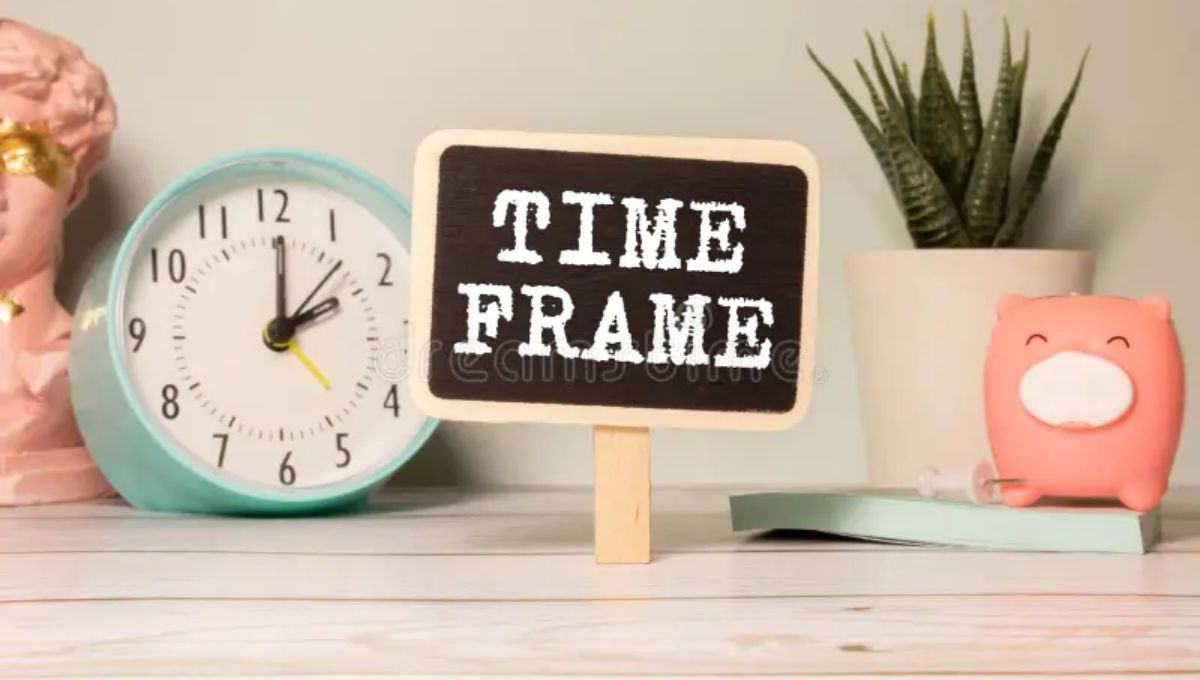
Ever notice how often the words “time frame” sneak into your emails? You write it once, then twice, then suddenly it’s in every paragraph of your project update, and the whole thing starts to feel a little flat.
You’re not imagining it. “Time frame” is one of those phrases that’s technically correct but gets worn thin from overuse, especially in business writing where deadlines and schedules come up constantly.
Here’s the good news: English gives you dozens of ways to talk about time without repeating yourself.
Whether you’re drafting a client email, writing a project proposal, or just trying to sound less robotic in a Slack message, this guide walks you through 30 solid alternatives to “time frame,” complete with real examples, tone guidance, and practical tips on when (and when not) to use each one.
What Does “Time Frame” Mean?
A time frame refers to a specified period during which something happens, gets planned, or needs to be completed.
It’s a structural boundary, really, one that helps people line up their expectations around schedules, deadlines, and the overall project lifecycle.
You’ll hear it in project planning meetings, see it in emails, and read it in reports where someone needs to communicate exactly how long a task, phase, or process will take.
Think of a time frame as the container that holds your work. It doesn’t tell you what’s inside the container, just how much room you’ve got before the lid needs to go back on.
For example, a marketing team might say, “We need to launch this campaign within a six-week time frame,” meaning six weeks is the outer boundary for getting everything done, from planning to execution.
The phrase works for both short and long stretches of time. A time frame could mean a couple of hours for finishing a report or several years for a strategic business initiative.
That flexibility is exactly why it shows up so often, and exactly why it starts to feel repetitive if you lean on it too heavily.
Read This Blog…SU Meaning In Text: Definition, Stand For, Examples & How It Is Used in Text
Is It Professional or Polite to Say “Time Frame”?
Yes, absolutely. “Time frame” is professional, polite, and completely standard in corporate, academic, and administrative settings.
Nobody’s going to raise an eyebrow if you use it in a client email or a project report. It’s neither rude nor overly casual, which makes it a safe default in almost any professional context.
That said, “safe” doesn’t always mean “ideal.” Because it’s used so widely, it can start to sound mechanical or clinical, especially when it shows up two or three times in the same paragraph.
Depending on the situation, swapping it out for a warmer or more specific term can soften the tone and make your communication feel more thoughtful. For instance, saying “Let’s find a window that works for both of us” feels friendlier than “What’s your time frame for this?” even though both convey nearly the same meaning.
Advantages and Disadvantages
Like most workplace phrases, “time frame” comes with its own set of trade-offs. Here’s a quick breakdown:
| Aspect | Details |
| Advantage: Universally understood | Everyone from interns to executives knows exactly what you mean |
| Advantage: Neutral tone | Works equally well in formal reports and casual check-ins |
| Advantage: Flexible | Applies to short tasks and long-term projects alike |
| Disadvantage: Overused | Repeating it constantly can make writing feel stale |
| Disadvantage: Can sound rigid | May come across as clinical or overly administrative in warmer, relationship-driven communication |
| Disadvantage: Vague on its own | Doesn’t specify whether you mean a deadline, a duration, or a flexible window |
Synonyms for “Time Frame”
Before diving into detailed breakdowns, here’s a quick-glance list of the 30 alternatives covered in this guide:
Window, Period, Span, Duration, Window of Opportunity, Schedule, Timeline, Interim, Window of Time, Target Date, Projected Length, Season, Horizon, Block of Time, Stretch of Days, Milestone Marker, Stretch, Phase, Epoch, Turnaround, Deadline Window, Execution Space, Planning Horizon, Working Window, Operational Span, Delivery Window, Target Window, Review Period, Scope of Days, and Calendar Space.
Each one carries a slightly different flavor. Some sound formal and precise, like duration or completion period.
Others sound warmer and more conversational, like stretch or window of time.
Picking the right one comes down to matching the word to your audience, your tone, and how much flexibility you want to signal.
Read This Blog…What Does WH Mean in Text Messages Today? The Complete 2026 Guide 🤔💬
Why Choosing the Right Alternative to “Time Frame” Matters
Here’s something a lot of people overlook: the word you choose doesn’t just fill space, it shapes how your reader feels about the timing you’re describing. Say “deadline” and people tense up a little.
Say “target window” and the same information suddenly feels more collaborative, less like a countdown clock.
This matters more than you’d think in professional communication. A project manager who constantly says “deadline” might unintentionally create a stressful atmosphere on their team, whereas one who occasionally swaps in “target date” or “working window” signals flexibility without sacrificing clarity.
Word choice becomes a quiet form of tone management, and tone management is a huge part of what separates good communicators from great ones.
There’s also a practical side to this. Repetition dulls attention. If every sentence in your report says “time frame,” your reader’s eyes start to glaze over by paragraph three.
Varying your vocabulary keeps people engaged, and engaged readers retain more of what you actually said. So this isn’t just about sounding fancy, it’s about being understood.
When to Use “Time Frame”
“Time frame” works best in situations where you need a neutral, general-purpose term that doesn’t lean too formal or too casual. Use it when:
- You’re discussing project deadlines, schedules, or expected completion periods with a mixed audience
- You want a term that works equally well in writing and speech
- The context doesn’t require you to specify whether you mean a firm deadline, a flexible window, or an ongoing duration
- You’re speaking with clients, employers, or colleagues and want a safe, universally understood choice
Bonus Section: Polite Alternatives You Can Use in Emails
Instead of the blunt “What’s the time frame?” try one of these softer, client-friendly options:
- “Could you please confirm the expected timeline?”
- “May I know the estimated completion period?”
- “What’s the anticipated duration for this project?”
- “Could you share the projected schedule?”
- “When can we expect this to be finalized?”
Pros and Cons of “Time Frame”
| Pros | Cons |
| Instantly recognizable across industries | Overuse leads to repetitive, dull writing |
| Works in both formal and semi-formal contexts | Doesn’t specify precision (deadline vs. duration vs. window) |
| Easy to pair with modifiers (e.g., “estimated time frame”) | Can sound overly administrative in relationship-driven writing |
| Grammatically simple and widely accepted | Lacks the visual or structural nuance of “timeline” |
Why We Need to Use Alternatives
Business communication in 2026 demands more than just correctness, it demands clarity, precision, and tone awareness. Relying on the same phrase over and over doesn’t just sound repetitive, it can actually undersell your message.
If you’re managing a team, writing a project proposal, or drafting an email to a client, the goal isn’t just to convey information; it’s to convey it in a way that builds trust and keeps people engaged.
Alternatives also let you be more specific. “Time frame” is a catch-all term, but “turnaround time” tells your reader you’re talking about how fast a task gets completed, while “grace period” tells them you’re offering flexibility after a deadline.
Precision like that reduces confusion and prevents the kind of back-and-forth clarifying emails nobody has time for.
Quick Comparison Table
| Alternative | Best For | Tone |
| Timeline | Project planning, visual sequencing | Structured, organized |
| Duration | Events, courses, precise lengths | Formal, precise |
| Deadline | Submissions, contracts, urgent tasks | Direct, time-sensitive |
| Turnaround Time | Customer service, production | Efficient, professional |
| Grace Period | Payments, late submissions | Considerate, flexible |
| Window | Scheduling, flexible availability | Warm, accommodating |
| Planning Horizon | Strategic, long-term initiatives | Visionary, formal |
| Delivery Window | Shipping, logistics | Customer-focused |
1. Window
A window describes a designated interval during which an activity can happen or a task can get completed. It softens the rigidity of a strict deadline, giving the reader a sense of breathing room rather than a punishing cutoff.
Example: “We have a small window on Tuesday afternoon to review the draft together.”
Best used in collaborative scheduling contexts where flexibility matters more than precision.
2. Period
A period is a length of time marked by specific activities or conditions. It’s a classic, neutral substitute with a calm, steady cadence, no corporate rush attached.
Example: “During this transition period, please feel free to reach out with any questions.”
Great for longer organizational shifts, seasonal planning, or general references to elapsed time.
3. Span
A span captures the full extent of time from beginning to end. It carries a sense of progression, encouraging patience over frantic rushing.
Example: “Over a two-week span, we’ll gather all the community feedback.”
Best for describing ongoing processes, creative projects, or anything with a clear start and end point.
4. Duration
Duration refers to how long something continues to happen or exist. It’s slightly formal, but it delivers precise clarity without sounding cold.
Example: “The entire duration of the workshop will run roughly ninety minutes.”
Perfect for events, webinars, contracts, and any formal commitment where exact length matters.
5. Window of Opportunity
A window of opportunity describes a favorable interval during which something can get achieved before it closes. It adds encouragement, framing timing as a chance rather than a burden.
Example: “Let’s make the most of this window of opportunity to finalize our goals.”
Use it when you want to motivate a team toward timely action, not just remind them of a deadline.
6. Schedule
A schedule lists intended events and their corresponding times. It gives structured clarity while staying collaborative and supportive.
Example: “We can adjust our project schedule if anyone needs extra breathing room.”
Ideal for everyday operational planning, scheduling meetings, and coordinating across teams.
7. Timeline
A timeline arranges important events or tasks in chronological order. It’s incredibly useful for visualizing progress and keeping everyone aligned without feeling overwhelmed.
Example: “Here’s a suggested timeline to guide your writing process.”
Best for project management, product launches, and step-by-step planning where sequence matters.
8. Interim
The interim describes the time between one event or period and another. It acknowledges that transitional moments can feel uncertain, adding a touch of reassurance.
Example: “During the interim, we’ll make sure all daily operations run smoothly.”
Use it when managing transitions, like leadership changes or shifting offices.
9. Window of Time
A window of time refers to a specific block dedicated to a particular action or conversation. It respects the other person’s busy schedule by clearly defining a limit.
Example: “I have a small window of time open tomorrow morning if you want to chat.”
Great for arranging meetings, personal check-ins, or quick one-on-ones.
10. Target Date
A target date is a goal-oriented date chosen for completing or launching a project. Framing timing around a target date treats the completion goal like a lighthouse rather than a whip cracking overhead.
Example: “Our target date for the launch is the first of next month, keeping flexibility in mind.”
Use it for goal-setting, collaborative milestones, and situations where the exact date might shift slightly.
11. Projected Length
Projected length is an estimated duration based on current expectations and past experience. It acknowledges uncertainty gracefully, admitting that plans evolve.
Example: “The projected length of this renovation is roughly three weeks.”
Best for estimates, budgeting conversations, and client communication where exact timing isn’t locked in yet.
12. Season
A season is a particular period traditionally marked by distinct activities or emotional tone. It infuses warmth into scheduling talk, framing timing as a natural chapter rather than a harsh corporate quarter.
Example: “Let’s approach this busy season of growth with kindness toward one another.”
Use it for long-term planning, community updates, or creative endeavors where a poetic touch fits.
13. Horizon
A horizon is the limit of a person’s forward-looking perspective. It inspires imagination and long-term vision, encouraging people to look ahead with hope.
Example: “We have some wonderful projects on the horizon for this coming quarter.”
Great for vision-casting, strategic discussions, and future planning conversations.
14. Block of Time
A block of time is a dedicated, uninterrupted portion of a schedule set aside for a single task. It protects focus and respects deep work.
Example: “I’m setting aside a solid block of time on Friday to help you with this.”
Use it when scheduling focused work, mentoring sessions, or anything requiring concentration.
15. Stretch of Days
A stretch of days is a continuous succession of calendar days following a certain pattern or focus. It softens duration into something organic, almost like a walk down a path.
Example: “Over the next stretch of days, we’ll focus entirely on testing.”
Best for team sprints, creative retreats, or extended focused efforts.
16. Milestone Marker
A milestone marker is a significant checkpoint along a scheduled journey. It shifts attention away from constant pressure and toward celebrating progress.
Example: “Reaching this first milestone marker deserves a collective thank you.”
Use it in project management contexts, personal growth tracking, or team celebrations tied to specific stages of development.
17. Stretch
A stretch is a continuous period spent doing something. It feels human and grounded, acknowledging that some periods demand a little extra endurance.
Example: “This next stretch might feel busy, but we’re in it together.”
Great for encouraging teams through demanding tasks or busy seasons.
18. Phase
A phase is a distinct stage in a process of change or development. It breaks daunting workloads into manageable chapters, reducing mental fatigue.
Example: “We’re currently moving into the design phase of the project.”
Best for structured projects, product development, and learning curricula with clear project stages.
19. Epoch
An epoch is a particular period marked by notable events or characteristics. It adds grandeur to routine planning, making everyday efforts feel monumental.
Example: “This marks a brand-new epoch of collaboration for our community.”
Use it sparingly, ideally for major organizational overhauls or inspirational speeches.
20. Turnaround
Turnaround refers to the time taken to complete a process, especially one involving production. It establishes a respectful, professional expectation for service delivery.
Example: “Our standard turnaround for feedback is roughly forty-eight hours.”
Common in customer service, creative deliverables, and administrative work where turnaround time drives client satisfaction.
21. Deadline Window
A deadline window is an allocated bracket of time leading up to a final required completion point. It softens a harsh deadline by giving people a graceful margin to submit work without panic.
Example: “Please submit your forms within this deadline window to ensure processing.”
Use it for administrative submissions, event registrations, and other time-sensitive processes with slight flexibility built in.
22. Execution Space
Execution space is the designated period of active production and implementation. It focuses on the creation process itself rather than just the clock.
Example: “Let’s protect our execution space this morning from distractions.”
Best for team productivity sessions and creative workshops where uninterrupted focus matters.
23. Planning Horizon
A planning horizon is the future period considered for strategic planning and resource allocation. It encourages long-term, thoughtful vision without binding people to rigid micro-management.
Example: “Our planning horizon for this initiative spans the next three years.”
Use it in strategic business meetings and long-term community development contexts.
24. Working Window
A working window describes the daily or weekly hours dedicated productively to a specific objective. It highlights active productivity while respecting work-life balance.
Example: “My preferred working window for meetings is between ten and two.”
Great for setting availability with clients, colleagues, or freelance collaborators.
25. Operational Span
Operational span is the continuous period during which operations, services, or events remain active. It offers a grounded, realistic look at how long systems need to run.
Example: “The operational span of the festival runs from Friday morning through Sunday night.”
Use it for event management, IT infrastructure, and logistical planning.
26. Delivery Window
A delivery window is the scheduled timeframe during which a package, service, or output is promised to arrive. It provides clear expectations while building a little anticipation.
Example: “Your items will arrive within a delivery window of two hours tomorrow afternoon.”
Common in logistics, shipping, and client handovers where precise timing drives customer service.
27. Target Window
A target window is a flexible bracket of time centered around an ideal goal. It removes the stress of exact precision, encouraging people to aim for success with gentle reassurance.
Example: “We’re aiming for a target window in early autumn for the release.”
Use it for launch planning, marketing campaigns, and goal-setting conversations.
28. Review Period
A review period is a designated duration set aside to evaluate and provide feedback on work. It normalizes constructive feedback as a natural part of any growth process.
Example: “We have a two-week review period ahead to incorporate all your notes.”
Best for editing phases, performance appraisals, and product testing cycles.
29. Scope of Days
Scope of days describes an inclusive collection of calendar days dedicated to a specific experience or effort. It sounds gentle and artistic, transforming standard scheduling into something like a curated journey.
Example: “Over a short scope of days, we can easily accomplish this together.”
Use it for personal planning, retreats, or creative journaling contexts.
30. Calendar Space
Calendar space is the visual and practical room available within a schedule for booking commitments. It treats available hours as precious real estate worth protecting.
Example: “Let’s look at our calendar space next week before taking on anything new.”
Great for personal scheduling, capacity planning, and avoiding burnout by respecting limited availability.
FAQs
Is “Time Frame” professional?
Yes. It’s polite, clear, and widely accepted in business, academic, and administrative writing.
What is a formal way to say “Time Frame”?
Try “specified period,” “project timeline,” “duration,” or “planning horizon” for formal contexts.
What is a simple way to say “Time Frame”?
“Period,” “length of time,” or “how long this will take” all work as simple, everyday alternatives.
Can I use “Timeline” instead of “Time Frame”?
Yes, especially when discussing project deadlines, task sequences, or expected completion dates.
What is the difference between “Time Frame” and “Timeline”?
A time frame describes a specific period, while a timeline shows the sequence of tasks or events across that period.
How can I avoid repeating “Time Frame”?
Rotate in alternatives like interval, span, duration, phase, or project timeline depending on context.
What is a good alternative to “Time Frame” in an email?
“Expected completion period,” “project timeline,” “target date,” or “delivery window” all sound professional in email.
Why should I use alternatives to “Time Frame”?
Alternatives reduce repetition and help your writing sound more natural, confident, and precise.
Which “Time Frame” alternative is best?
There’s no single best option. Use timeline for projects, duration for exact lengths, and target date for specific goals.
Is “time frame” grammatically correct?
Yes, it’s grammatically correct and appropriate for professional and everyday communication.
Is “timeline” the same as “time frame”?
Not exactly. A timeline shows chronological order, while a time frame simply defines a period.
What is a better word than “time frame” for a deadline?
“Deadline” itself is usually the clearest choice when you mean a specific due date.
What can I say instead of “estimated time frame”?
Try “estimated time,” “anticipated duration,” or “expected completion time.”
Why is using time frame alternatives important?
It keeps your writing fresh, precise, and better tailored to formal or casual contexts.
What are common alternatives to a time frame?
Period, duration, timeline, interval, phase, window, and session are all common substitutes.
Can a time frame be used in casual communication?
Yes, but simpler terms like “window of time” or “spell” often feel more natural in casual talk.
How does a timeline differ from a time frame?
A timeline visually maps events in order, while a time frame defines the overall period they occur within.
Is “deadline” a type of time frame?
Yes, a deadline marks a specific point within a broader time frame.
How do I decide which alternative to use?
Base it on context, formality, and purpose, like phase for stages or interval for recurring breaks.
Can using alternatives improve my writing?
Absolutely. Varying your language improves readability and keeps readers engaged.
What is the best alternative for short tasks?
Interval, session, or spell all work well for short, focused tasks.
Are these alternatives suitable for project management?
Yes, terms like timeline, phase, duration, and lead time enhance project tracking and communication.
Can I use these alternatives for personal planning?
Definitely. Window of time, period, or active period all help structure personal routines and goals.
How do time frame alternatives affect tone?
Formal terms like duration or tenure sound professional, while casual ones like spell feel relaxed and friendly.
What is the difference between span and duration?
Span emphasizes range from start to end, while duration emphasizes total length. Both measure time, just with different focus.
How can I use these alternatives in business emails?
Swap in timeline, deadline, or window of time to sound clear, professional, and considerate in client-facing communication.





1 thought on “Time Frame Synonyms: 30 Smarter Ways to Say “Time Frame” (With Examples)”