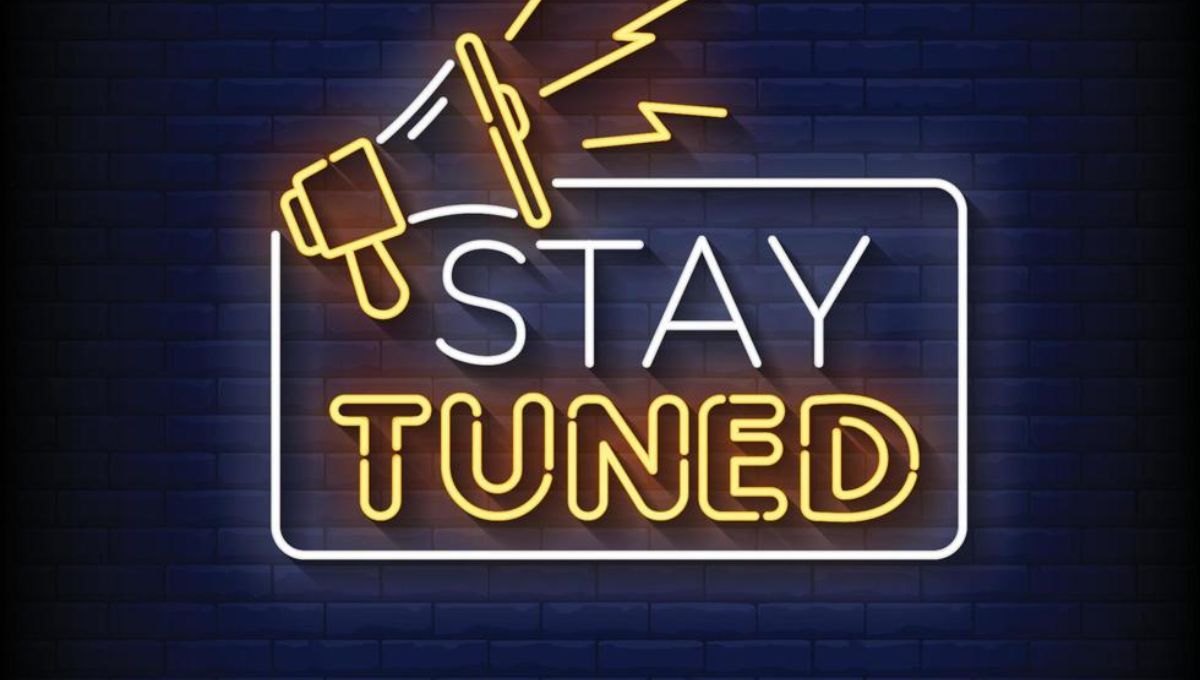
Picture your favorite HGTV show for a second. The interior designer just ripped out a kitchen wall, the camera cuts to black, and the host grins at the camera: “Stay tuned to see the big reveal.”
You’ve heard that phrase a thousand times, and it still works, because it promises something good is coming.
That’s the whole magic trick behind “stay tuned” — it’s short, it’s familiar, and it makes people want to hang around.
But here’s the catch: if you’re the one writing the caption, the email, or the script, typing “stay tuned” for the tenth time this month starts to feel a little flat.
Your audience notices repetition too, whether they’re scrolling Instagram or reading a project update from your business partner.
So let’s fix that. Below you’ll find 25 other ways to say “stay tuned,” sorted by tone, backed by real examples, and built so you’ll never run out of fresh words again.
Stay Tuned Meaning and Definition
Before diving into alternatives, let’s nail down the stay tuned meaning. At its core, “stay tuned” is an invitation.
It tells someone: don’t go anywhere, because upcoming updates, new information, or important developments are on the way.
The stay tuned definition traces back to old-school radio and TV broadcasting, when hosts asked listeners to stay on the same channel through a commercial break so they wouldn’t miss what came next.
That broadcasting root still shapes how the phrase feels today. Whether you’re watching a live stream, following a YouTube creator, or reading a company newsletter, “stay tuned” carries the same energy: something’s coming, and you’ll want to see it.
Read This Blog…What Does WH Mean in Text Messages Today? The Complete 2026 Guide 🤔💬
When to Use “Stay Tuned”
You can reach for this phrase (or one of its cousins) any time you want to build anticipation without giving away the full story. A few common situations:
- Teasing a product launch or new feature before it’s ready
- Sharing project updates when final details aren’t confirmed yet
- Announcing event details ahead of a full schedule release
- Managing client communication during a review or approval process
- Signaling upcoming content, like a future video or live broadcast
Is It Professional or Polite to Say “Stay Tuned”?
Short answer: yes, in most cases. “Stay tuned” reads as friendly and approachable, which makes it a safe pick for marketing emails, social captions, and even casual workplace communication.
However, it can feel a touch too breezy for formal communication — a legal notice, a board memo, or a serious client report probably calls for something like “further developments will be communicated” instead.
The trick is matching tone to setting. A relationship coach texting her followers “stay tuned for more advice” sounds warm and human.
A law firm emailing “stay tuned” about a contract dispute? That misses the mark.
Read This Blog…25 Other Ways to Say “Thank You for Your Assistance in This Matter” (With Examples)
Benefits of Using “Stay Tuned” Alternatives
Swapping in stay tuned alternatives isn’t just about sounding fancy. It solves real communication problems:
- Avoids repetition — readers notice when you use the same three words every single post
- Matches tone to audience — a Gen Z social team and a corporate legal department shouldn’t sound identical
- Builds emotional connection — phrases like “we appreciate your patience” show empathy, not just information
- Improves engagement — varied language keeps your writing feeling fresh instead of templated
- Signals professionalism — the right alternative can make even a delay sound organized and intentional
Why These Alternatives Matter in Communication
Words carry weight beyond their literal meaning. When you say “hang tight,” you sound like a friend.
When you say “await further instructions,” you sound like a compliance officer. Neither is wrong — they just serve different relationships.
Using a variety of stay tuned alternatives lets you match the emotional register of the moment: reassuring during a delay, exciting during a product teaser, formal during an official notice.
This matters even more now that so much communication happens across multiple channels at once.
The same company might need a casual Instagram caption, a professional client email, and a formal press release — all within the same week, all needing a slightly different way to say “more is coming.”
Pros or Cons
| Pros | Cons |
| Builds anticipation and curiosity | Can feel vague without a timeline |
| Works across formal and informal settings | Overuse leads to reader fatigue |
| Encourages audience engagement and trust | May create uncertainty if you never follow up |
| Flexible across email, social media, and TV | Not always appropriate for serious or legal contexts |
25 Other Ways to Say “Stay Tuned” (With Examples)
Here’s the full list. Each one includes what it means, when to use it, and real example sentences you can adapt right away.
Keep Watching
Meaning: Encourages your audience to stay engaged with ongoing or upcoming content.
Examples:
- Keep watching — the big reveal happens right after this.
- Keep watching for our next livestream announcement.
Best for: YouTube, TV broadcasting, live events
More to Come
Meaning: Signals additional information or developments are on the way.
Examples:
- We finalized round one, and there’s more to come next week.
- More to come on the renovation as the project progresses.
Best for: Newsletters, blogs, ongoing projects
Updates Soon
Meaning: A quick, casual way to promise fresh news shortly.
Examples:
- Updates soon on the product launch — hang in there.
- We’ll drop updates soon once the review wraps up.
Best for: Social media, product teams
Coming Up Next
Meaning: Highlights what’s happening immediately after the current segment.
Examples:
- Coming up next, an exclusive interview with our founder.
- Coming up next: the full event schedule.
Best for: Broadcasts, podcasts, presentations
Don’t Miss Out
Meaning: Adds urgency, encouraging immediate attention.
Examples:
- Don’t miss out — exclusive offers drop tomorrow.
- Don’t miss out on tomorrow’s product release.
Best for: Marketing campaigns, sales promotions
Stay Alert
Meaning: Asks the audience to remain attentive for time-sensitive updates.
Examples:
- Stay alert for schedule changes this weekend.
- Stay alert — breaking news could arrive any minute.
Best for: Emergency notifications, security updates
Check Back Soon
Meaning: Invites the reader to return later for new content.
Examples:
- Check back soon for the full guide.
- Check back soon — we’re adding new details this week.
Best for: Blogs, websites, evolving pages
Keep an Eye Out
Meaning: A friendly nudge to watch for something specific.
Examples:
- Keep an eye out for our email this Friday.
- Keep an eye out for job opportunities posted soon.
Best for: Newsletters, casual reminders
More Coming
Meaning: A short promise that additional content or details will follow.
Examples:
- More coming in next week’s newsletter.
- There’s more coming, so don’t unsubscribe yet.
Best for: Content creators, email lists
Hang Tight
Meaning: Asks for patience in a warm, casual way.
Examples:
- Hang tight while we finalize the details.
- Hang tight — the wait is almost over.
Best for: Customer support, informal updates
Watch This Space
Meaning: Builds curiosity about something big without revealing details.
Examples:
- Watch this space for our biggest announcement yet.
- Watch this space — changes are coming to the brand.
Best for: Branding, marketing campaigns
Await Updates
Meaning: Formal phrasing telling the audience to expect news soon.
Examples:
- Please await updates regarding your application status.
- Await updates on the project timeline this quarter.
Best for: Corporate emails, official notices
On the Horizon
Meaning: Suggests something important is approaching.
Examples:
- Big changes are on the horizon for our team.
- New features are on the horizon this fall.
Best for: Blogs, professional content
Future Content
Meaning: Signals material that will be shared down the line.
Examples:
- Future content will include tutorials you won’t want to miss.
- Future content drops every Thursday.
Best for: Content creators, course platforms
Preview Coming
Meaning: Promises a sneak peek before the full release.
Examples:
- A preview is coming later this week.
- Preview coming soon of our new series.
Best for: Streaming platforms, entertainment
Don’t Miss What’s Next
Meaning: Encourages attention to the following segment or update.
Examples:
- Don’t miss what’s next in this episode.
- Don’t miss what’s next in our product roadmap.
Best for: Podcasts, webinars
Keep Posted
Meaning: Asks the audience to stay informed about updates.
Examples:
- Keep posted for changes to the meeting schedule.
- We’ll keep posted as new information arrives.
Best for: Team communication, professional updates
Stay Informed
Meaning: Encourages ongoing awareness of developments or news.
Examples:
- Stay informed about market trends this quarter.
- Stay informed with our weekly briefing.
Best for: News, professional communication
Don’t Miss the Update
Meaning: Flags an important, time-sensitive piece of information.
Examples:
- Don’t miss the update on our new pricing.
- Don’t miss the update — it changes everything.
Best for: Product announcements, email campaigns
Next Up
Meaning: Signals immediate transition to new content.
Examples:
- Next up, a Q&A with our support team.
- Next up: your first look at the new dashboard.
Best for: Live streams, event agendas
Stay Posted for News
Meaning: Encourages attention for upcoming announcements.
Examples:
- Stay posted for news about our holiday offers.
- Stay posted for news on the app redesign.
Best for: Social media, marketing campaigns
Keep Your Eyes Open
Meaning: A casual call to notice something coming.
Examples:
- Keep your eyes open for the next big drop.
- Keep your eyes open for surprise deals this week.
Best for: Social updates, promotions
Watch Out for Updates
Meaning: Suggests careful attention to incoming information.
Examples:
- Watch out for updates on the site redesign.
- Watch out for updates rolling out this weekend.
Best for: Blogs, service notices
Hold Tight
Meaning: Asks for patience while details are finalized.
Examples:
- Hold tight as we load the next chapter.
- Hold tight — we’re almost ready to share.
Best for: Live streams, casual announcements
Keep Watching for More
Meaning: Encourages continued observation for additional updates.
Examples:
- Keep watching for more tips on home renovation.
- Keep watching for more behind-the-scenes footage.
Best for: Video content, social platforms
Quick Reference Table
| Phrase | Tone | Best Platform |
| Hang Tight | Casual | Customer support |
| Watch This Space | Exciting | Marketing, branding |
| Await Updates | Formal | Corporate email |
| Keep Posted | Professional | Workplace communication |
| Don’t Miss Out | Urgent | Promotions, sales |
Bonus Section: Short Polite Thank-You Messages
Sometimes the follow-up to “stay tuned” matters just as much as the phrase itself. Once you deliver on your promise, close the loop with gratitude:
- “Thanks so much for your patience while we got this ready.”
- “We appreciate you sticking around for the update.”
- “Thank you for your assistance in this matter — we’ll keep the momentum going.”
Advantages and Disadvantages of Using Standard Business Phrases
Advantages
- Sound polished and consistent across formal communication
- Reduce ambiguity in official announcements
- Build trust through predictable, professional tone
Disadvantages
- Can feel robotic or distant if overused
- Lack the warmth needed for relationship-focused communication
- May not translate well to casual platforms like Instagram or Twitter
Final Writing Tips
Pick your phrase based on audience, channel, and urgency — not habit. A boyfriend texting his partner “hang tight, almost home” sounds nothing like a company emailing “await further instructions,” and that’s the point.
Match the words to the moment, follow through on what you promise, and don’t be afraid to mix a few alternatives across the same campaign to keep things feeling human.
Final Thoughts
“Stay tuned” earned its place in everyday language because it works — it’s short, familiar, and effective at building anticipation.
But leaning on the same three words every time you communicate can make even exciting news sound routine.
With 25 alternatives covering professional communication, casual conversation, and everything in between, you’ll always have the right words ready, whether you’re running an HGTV-style reveal, managing a marriage of business partners on a joint venture, or simply keeping your newsletter subscribers engaged.
FAQs
Where is “Stay Tuned” commonly used?
It’s common in TV broadcasting, radio, social media, and email newsletters whenever more information is coming soon.
Why do creators say “Stay Tuned”?
Creators use it to build anticipation and keep followers engaged until the next video, post, or live stream drops.
How does it improve communication?
It sets clear expectations, letting your audience know updates are on the way without giving everything away at once.
Can I use “Stay Tuned” in a business email?
Yes, it’s generally fine for casual business communication, though formal reports may call for phrasing like “further details are forthcoming.”
What is a friendly alternative to “Stay Tuned”?
“Hang tight” or “keep an eye out” both sound warm and conversational.
Is “Stay Tuned” still commonly used today?
Absolutely — it remains popular across social media, marketing, and everyday conversation.
Which alternative sounds the most professional?
“Await further updates” or “further developments will be communicated” both read as formal and polished.
What are better alternatives to stay tuned?
It depends on tone: “watch this space” for excitement, “stay informed” for professionalism, “hang tight” for casual settings.
Where can I use other ways to say “stay tuned”?
Anywhere you’d normally use the phrase — emails, social captions, presentations, and customer notifications.
How do these phrases improve modern communication?
They prevent repetition and let you match tone precisely to your audience and platform.
Does using alternatives help in professional writing?
It signals thoughtfulness and keeps formal communication from sounding stiff or copy-pasted.
Is “Stay Tuned” considered professional?
In most contexts, though very formal settings may benefit from alternatives.
Why is “Stay Tuned” popular in marketing?
It builds curiosity and keeps audiences engaged without revealing full details upfront.
What are some alternatives to “Stay Tuned”?
Options include “more to come,” “watch this space,” “stay informed,” and “keep posted.”
Can I use it on social media?
Platforms like Instagram, Twitter, and YouTube all use “stay tuned” and its alternatives regularly.
How do I make it engaging?
Pair the phrase with a teaser or hint about what’s coming to spark curiosity.
Can it feel vague?
Yes, without a timeline or follow-up, it can leave your audience uncertain.
Does it work for emails?
Yes, especially in newsletters or project updates where future information is relevant.
How does it affect engagement?
It increases attention and anticipation, keeping readers invested in what comes next.
Can it be used in meetings?
Yes — saying “stay tuned for next steps” helps maintain focus during presentations.
What tone should I use?
Match your audience: friendly for casual settings, formal for corporate or legal communication.
Should I always follow up?
Following through builds credibility and avoids frustrating your audience.
Does it work internationally?
It’s widely understood across English-speaking audiences and media platforms.
Can I mix alternatives?
Definitely — mixing phrases keeps your writing varied and prevents repetitive, templated language.





1 thought on “25 Other Ways to Say “Stay Tuned” (With Examples)”