You’re scrolling through a group chat, you ask a simple question, and someone fires back “ofc 😂.” For half a second, you just stare at the screen. Is that a yes? Is it sarcasm? Did you miss something? If you’ve ever paused mid-conversation trying to decode a three-letter reply, you’re far from alone — this exact moment happens to millions of people every single day across texting apps, social media, and group chats.
That’s exactly why so many people search “OFC meaning in text” or “what does OFC mean” every month. Texting slang moves fast, and abbreviations like this one show up constantly on Snapchat, Instagram, WhatsApp, Discord, and good old-fashioned SMS.
This guide breaks down everything you need to know: what OFC actually stands for, how people use it in real conversations, when it sounds friendly versus rude, and how you should respond the next time it lands in your inbox.
🧠 What Does OFC Mean in Text?

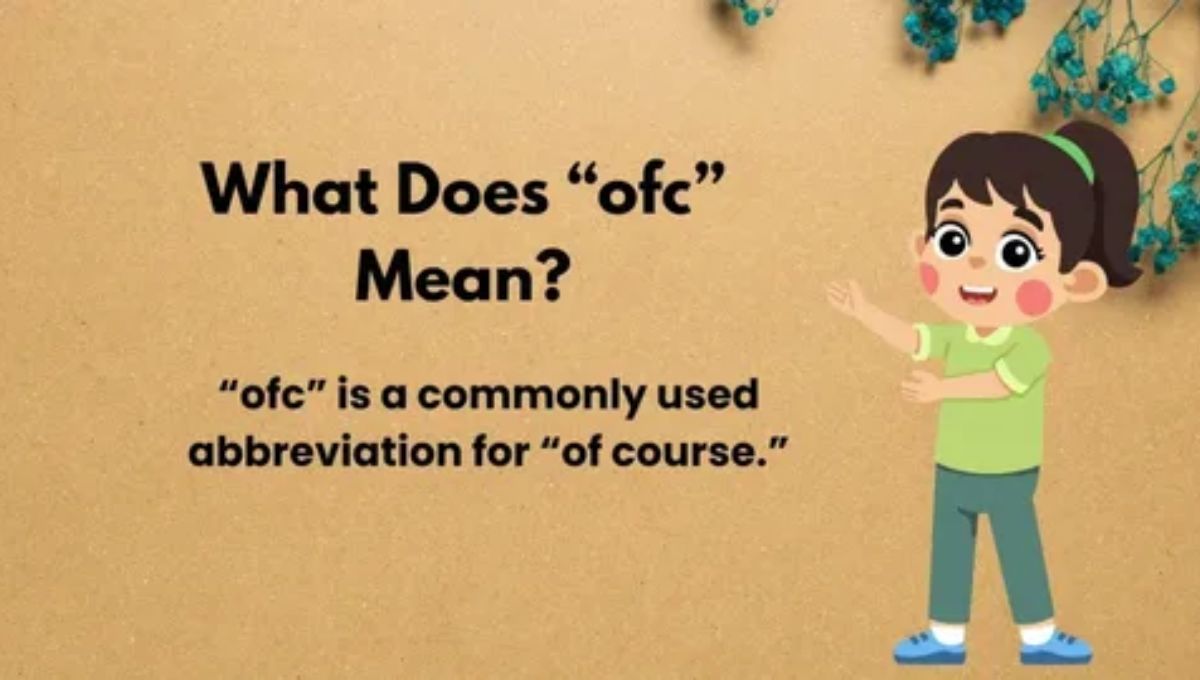
OFC stands for “Of Course.” It’s one of the most common pieces of texting abbreviation you’ll run into, and it works as a quick, casual way of saying “definitely,” “sure,” or “yes, absolutely.” Instead of typing out the full phrase every time, people shorten it because, honestly, who wants to type six extra letters when three will do the job?
Here’s a simple exchange that shows it in action:
A: can you help me later? B: ofc 😊
In that context, OFC meaning in text boils down to one thing: yes, I’ve got you. People typically reach for it when they’re:
- Agreeing with someone
- Answering a question positively
- Reassuring a friend or partner
- Responding quickly without overthinking it
So in short: OFC = Of Course = Definitely, Yes, or Absolutely. It’s become a staple of modern digital communication precisely because it’s fast, friendly, and instantly understood by pretty much anyone active on social media.
📱 Where Is OFC Commonly Used?
OFC shows up just about everywhere online, and there’s a simple reason for that: it’s short, it’s easy to type, and it fits naturally into casual conversation.
📍 Popular Platforms:
- 📱 Text messages (SMS)
- 💬 WhatsApp & Messenger
- 👻 Snapchat
- 🎵 TikTok comments & DMs
- 📸 Instagram chats
- 🎮 Discord & gaming chats
🧩 Tone & Style:
- ✔️ Friendly
- ✔️ Casual
- ✔️ Positive
- ✔️ Supportive
- ❌ Not formal or professional
The Most Common Meanings of “ofc”
While “of course” is the standard translation, the exact meaning in context shifts a little depending on the situation. Understanding these nuances helps you read the room (or the chat) more accurately.
1. Of course (normal agreement)
This is the baseline meaning — plain, simple agreement.
A: Can you help me? B: ofc
Meaning: Yes, I will help you. No hesitation, no drama, just a straightforward positive reply.
2. Obvious yes (strong confirmation)
Sometimes OFC signals that the answer was never really in question.
A: Do you like pizza? B: ofc
Meaning: Obviously yes — this reply carries a bit more emphasis than plain agreement, almost like saying “duh, of course I do.”
3. Casual support or approval
People also use it to back someone up quickly, without writing out a whole paragraph of encouragement.
A: I think I’ll go for it. B: ofc you should
Meaning: I fully support your decision.
4. Sarcastic tone (less common)
Every once in a while, OFC takes on a slightly teasing or sarcastic edge.
A: You’re going to be late again? B: ofc…
Meaning: It’s expected from you at this point — playful, sometimes a little sassy, but rarely mean-spirited.
🕓 When to Use and When Not to Use OFC
Knowing exactly when this abbreviation fits — and when it doesn’t — makes your texting sound natural instead of awkward or out of place.
✅ When to Use OFC
- Casual texting with friends
- Positive, upbeat replies
- Social media chats and comments
- Friendly online conversations
- Quick responses when you’re busy
Example:
“ofc i’ll help you 😄”
❌ When Not to Use OFC
- Professional emails
- Job applications
- Formal business communication
- Academic writing
- Serious, official conversations
Instead of OFC in those settings, swap in:
- “Of course”
- “Certainly”
- “Absolutely”
How “ofc” Is Used in Real Conversations
Context changes everything. The exact same three letters can feel completely different depending on who you’re talking to and where the conversation happens.
Friends & Casual Texting
Among friends, OFC feels fast, natural, and totally normal. It replaces a full sentence without losing any warmth.
A: Are you coming? B: ofc
Nothing complicated here — just a friendly, quick reply.
Instagram & Snapchat
On social platforms, people use OFC to respond to stories, DMs, and comments without breaking their scrolling rhythm.
A: You liked the post? B: ofc
It shows engagement without requiring much effort, which fits perfectly into the fast pace of social media chats.
Dating Apps
On apps like Tinder or Bumble, OFC can come across as confident and easygoing, though tone matters more here than almost anywhere else.
A: Do you like coffee dates? B: ofc
It can feel smooth and self-assured, but leaning on it too often in a budding conversation might come across as low-effort or uninterested.
Gaming & Online Communities
Gamers rely on OFC constantly for split-second coordination during matches.
A: Can you join the match? B: ofc
Speed matters in gaming chats, and OFC delivers exactly that.
Work or Professional Chat
This is where OFC gets risky. In a work setting, it can come across as too casual or even a little unprofessional.
A: Can you send the file? B: ofc
Better version:
“Of course, I’ll send it right over.”
Professional communication calls for a bit more polish, even in quick messaging apps like Slack or Teams.
Is “ofc” Rude, Flirty, or Offensive?
Short answer: not by default. Tone, punctuation, and relationship context all play a role in how it lands.
When it feels positive:
- Between close friends
- Supportive replies
- Quick, cheerful agreement
- Friendly, relaxed conversations
When it feels negative:
- One-word replies during serious or emotional conversations
- No punctuation or emoji to soften it
- Professional messages
- When the tone reads as sarcastic or dismissive
Flirty use:
In dating or flirty exchanges, OFC can feel confident and a little playful.
A: Would you go out with me again? B: ofc
This reads as direct, sure, and quietly charming — assuming the rest of the conversation supports that vibe.
Psychological angle:
Short replies like OFC naturally reduce emotional distance in a conversation. That works great in casual, low-stakes chats, but it can feel cold or dismissive during emotional or vulnerable moments. If someone shares something serious and gets a bare “ofc” back with no elaboration, it can land wrong — even if that wasn’t the intent at all.
🔄 Other Meanings of OFC in Text
While “Of Course” dominates in texting culture, OFC isn’t a one-trick acronym. Context changes everything:
| Context | Example Phrase | Meaning |
| Friendly Chat | “ofc i remember you 😄” | Definitely |
| Gaming Chat | “ofc we won” | Obviously |
| Relationship Talk | “ofc i care about you ❤️” | Reassurance |
| Work Chat | “Of course, I can assist.” | Professional version |
| Online Comments | “ofc people love this trend” | Naturally |
🔄 Similar Slang Words or Alternatives
Texting slang rarely exists in isolation — OFC has plenty of cousins that carry similar energy.
| Slang | Meaning | When to Use |
| YEAH | Yes | Casual agreement |
| DEF | Definitely | Friendly emphasis |
| BET | Okay / Sure | Modern slang reply |
| FS | For sure | Casual confirmation |
| NP | No problem | Helpful response |
| ALR | Alright | Relaxed agreement |
| YW | You’re welcome | Quick, polite reply |
🧠 Why Do People Use OFC?
There’s more behind this abbreviation’s popularity than simple habit.
⚡ 1. It Saves Time
Typing “ofc” takes a fraction of the time it takes to type “of course.” In a culture built around instant replies and quick responses, every saved keystroke matters.
📱 2. It Feels Casual
Shorthand naturally makes conversations feel relaxed, informal, and current rather than stiff or overly formal.
😄 3. It Sounds Friendly
OFC generally carries a warm, supportive energy — it reads as approachable rather than distant.
🔥 4. It’s Popular on Social Media
Platforms like TikTok and Snapchat reward speed and brevity, which naturally pushes abbreviations like OFC further into mainstream digital language.
😊 Is OFC Friendly or Rude?
Most of the time, this abbreviation reads as friendly and polite. Still, tone plays a bigger role than the words themselves.
😊 Friendly Tone
- “ofc 😊”
- “ofc i got you”
These read as warm and supportive, especially with an emoji attached.
😐 Neutral Tone
- “ofc”
Plain and straightforward — no strong emotional signal either way.
😏 Sarcastic Tone
- “ofc you forgot again 🙄”
This can carry a teasing or sarcastic edge, depending on the emoji and surrounding wording.
Emojis genuinely do the heavy lifting here. They clarify emotion and prevent a short reply from being misread as cold or dismissive.
How to Respond When Someone Says “ofc”
Your reply really just depends on the tone and situation you’re in.
Casual replies
- “Nice”
- “Cool”
- “Thanks”
Funny replies
- “I knew it 😂”
- “As expected”
- “Good answer”
Neutral replies
- “Okay”
- “Got it”
- “Perfect”
Professional replies
- “Thank you, I appreciate it.”
- “Great, thanks for confirming.”
- “Noted, thank you.”
The goal, in every case, is matching the tone you received. A playful “ofc 😂” deserves a playful reply, while a plain “ofc” in a work chat deserves something a bit more polished.
Common Misunderstandings About “ofc”
Plenty of people misread this little abbreviation more often than they’d expect.
1. Thinking it is rude
Some readers assume it’s cold or curt, when really it’s just fast typing — nothing personal behind it.
2. Confusing it with anger
OFC isn’t inherently angry. It’s simply a quick way of confirming something.
3. Assuming sarcasm always
Sarcasm exists, sure, but the overwhelming majority of OFC replies are perfectly normal and sincere.
4. Overthinking tone
People often read emotion into short slang that genuinely isn’t there. Most of the time, it’s just about speed, not feeling.
📖 OFC vs Other Similar Slang
Confusing OFC with other three-letter abbreviations happens more than you’d think. Here’s a quick side-by-side comparison:
| Slang | Full Form | Meaning |
| OFC | Of Course | Definitely / Yes |
| IDC | I Don’t Care | Showing indifference |
| IDK | I Don’t Know | Expressing uncertainty |
| TBH | To Be Honest | Sharing an honest opinion |
| IMO | In My Opinion | Giving a personal view |
FAQs
Is “ofc” formal or informal?
It’s informal and best suited for casual texting rather than professional or academic writing.
Can “ofc” be flirty?
In dating conversations, dit can come across as confident and playful depending on tone.
Why do people use “ofc” instead of “of course”?
Because it’s faster to type and matches the quick, casual pace of modern texting culture.
What is the full form of ofc?
The full form is “of course.”
Should I use “ofc” in work chats?
It’s better to avoid it and stick with “of course” for a more professional tone.
What does OFC stand for?
OFC stands for “Of Course,” used to show agreement or confirmation in a text message.
Can I use OFC in formal emails?
formal emails call for “of course” or “certainly” instead of the abbreviated slang version.
Is OFC popular on Snapchat and TikTok?
It’s extremely common across Snapchat, TikTok, Instagram, and everyday SMS texting.
What’s the difference between OFC and FS?
OFC means “of course,” while FS means “for sure” — both express agreement, though OFC tends to sound slightly warmer.
Why do people use OFC?
Because it’s quick, casual, and helps digital conversations feel more natural and effortless.
🧾 Final Thoughts
OFC ranks among the most common and genuinely useful pieces of texting abbreviation you’ll come across online. At its core, it simply means “of course,” and people lean on it to show agreement, support, reassurance, or quiet enthusiasm in a fast, casual way. Whether you’re catching up with friends, replying on social media, or keeping pace in a gaming chat, OFC keeps digital communication feeling fast and friendly.
That said, it’s still informal language at heart, so it’s worth avoiding in professional emails or genuinely serious conversations.
Tone matters just as much as the word itself — a simple emoji can turn a flat “ofc” into something warm and clearly positive.
Once you start noticing it, you’ll realize just how often this small acronym pops up in everyday conversation. The next time someone replies with “ofc,” you’ll know exactly what they mean: definitely, absolutely, yes.