You’re scrolling through a group chat, and someone drops “nice pfp 😍” under your friend’s new post. Or maybe you texted “I just saw a celebrity at the airport!” and got back a single word: “PFP.” No context, no explanation—just three letters staring back at you.
That’s the thing about internet slang. It moves fast, and nobody stops to explain it before using it. So if you’ve ever paused mid-conversation wondering what PFP means in text, you’re in good company.
This guide breaks down everything: the primary meaning, the sneaky secondary meaning, where it shows up most, and how to use it (or avoid it) without looking out of the loop.
🧠 What Does PFP Mean in Text?
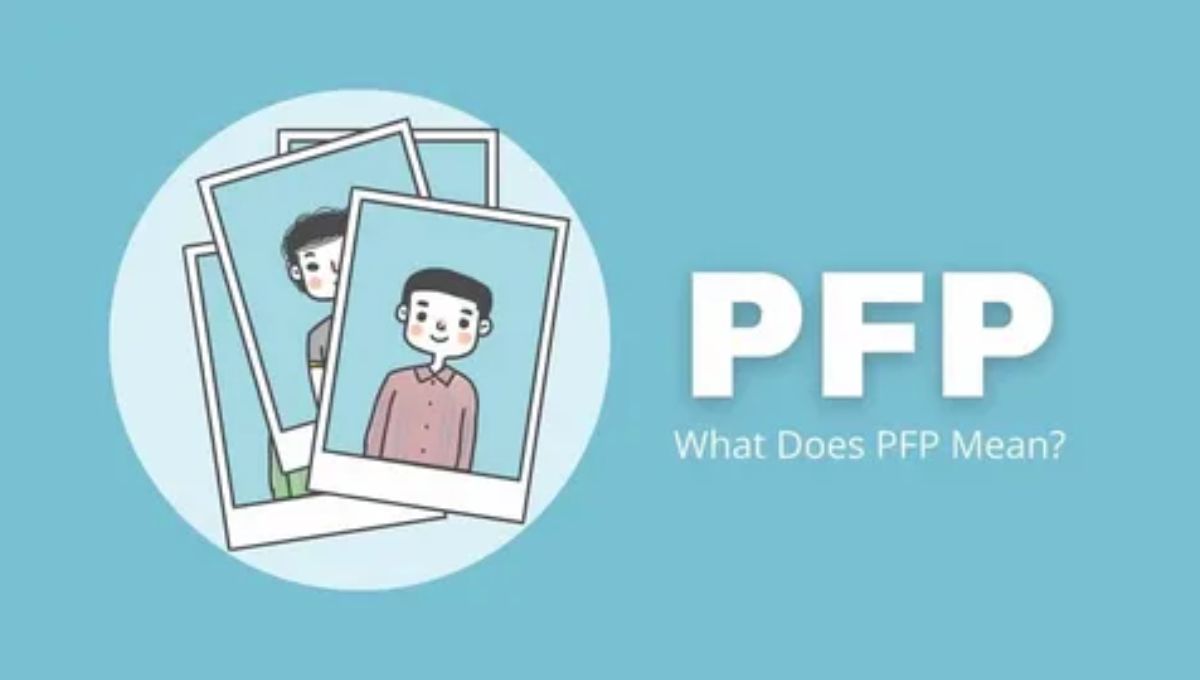
In almost every texting or social media context, PFP stands for “Profile Picture.” It’s the small image—your avatar, your icon, your account picture—that shows up next to your name on Instagram, TikTok, Discord, or any messaging app you use.
When someone types “PFP,” they’re usually talking about that image, whether they’re complimenting it, asking about it, or wondering who’s in it.
But here’s where it gets interesting: PFP has a second, less obvious meaning. In casual conversation—especially between friends who don’t quite believe each other—PFP can also mean “Picture for Proof.”
It works almost like a dare. If you tell a friend something wild (“I just met my celebrity crush!”), they might fire back “PFP or it didn’t happen.” Translation: prove it, or I’m not buying it.
Both meanings live under the same three letters, and figuring out which one someone means comes down entirely to context. A compliment about your feed? That’s profile picture. A skeptical friend demanding evidence mid-argument? That’s picture for proof.
Quick answer table:
| Meaning | What It Signals | Typical Setting |
| Profile Picture | Talking about someone’s avatar or account image | Social media comments, casual texts |
| Picture for Proof | Demanding photo evidence of a claim | Group chats, friendly arguments |
| Partnership for Peace | NATO cooperation program | Formal, political—rarely texted |
| Pay for Performance | Healthcare/business payment model | Professional, not casual chat |
Why You’re Probably Confused Right Now
Here’s the honest truth: internet slang doesn’t come with a manual. Nobody sends out a memo when a new abbreviation starts trending. One day “PFP” just… shows up in your comments, your DMs, your group chats, and you’re expected to already know what it means.
Adding to the confusion, PFP isn’t tied to one single platform or one single tone. It shows up as a genuine compliment (“love your pfp”), a lighthearted challenge (“pfp or you’re lying”), and occasionally as a totally unrelated acronym in a professional or academic context.
If you’ve felt lost, it’s not because you’re behind—it’s because the term genuinely does double (and sometimes triple) duty.
Full Form, Stands For & Short Meaning of PFP
The full form of PFP is simply “Profile Picture.” Unlike acronyms that carry several equally common expansions, PFP overwhelmingly leans on this one meaning across texting, gaming platforms, and social media accounts.
Short Meaning
If you want the bare-bones version, here’s what PFP boils down to:
- Online avatar
- Display photo
- Account picture
- User image
- Profile icon
Origin, History & First Known Use of PFP
Profile pictures existed long before the term “PFP” caught on. Back in the 1990s, early chatrooms and forums let users upload tiny, often pixelated avatars next to their usernames. These images served one purpose: identification. Nobody was thinking about aesthetics or personal branding yet.
That changed during the rise of Myspace and Facebook in the mid-to-late 2000s. Suddenly, profile photos became personal, curated, and public. People started treating their profile picture like a digital introduction, and platforms encouraged real photos over generic icons.
The abbreviation itself picked up steam through:
- Gaming communities, where fast typing during matches made shorthand essential
- Discord servers, where avatars became part of a user’s identity within a community
- Meme culture, which thrives on compressing ideas into as few characters as possible
- Online forums, where PFP became standard shorthand long before mainstream social media adopted it
📱 Where Is PFP Commonly Used?
PFP shows up practically everywhere digital communication happens, though some platforms lean on it more heavily than others. You’ll hear it most in spaces built around visual identity and fast, casual back-and-forth conversation.
Where PFP shows up most often:
- Instagram comments and DMs
- TikTok video comments
- Discord servers and voice chat
- Group texts and messaging apps
- Gaming platforms and Steam profiles
- Reddit threads discussing avatars
- Snapchat conversations (often referring to Bitmojis)
Who uses it most?
Teenagers, young adults, gamers, and content creators drive the bulk of PFP usage. Older generations—particularly on Facebook—still default to “profile photo,” simply because PFP never fully entered their vocabulary. If you texted your grandmother “nice pfp,” don’t be surprised if she asks what a “pfp” even is.
Read This Blog:What Does SMYW Mean in Text? 💬 Full Guide Here (2026)
PFP Meaning Across WhatsApp, Instagram, TikTok & Snapchat
The core definition stays consistent everywhere, but how people use the term shifts slightly depending on the app.
On WhatsApp, people often say “DP” (display picture) instead of PFP, though both terms describe the same thing. You’ll commonly hear questions like “why is your DP blank?” or “nice WhatsApp pfp” in casual chats.
Instagram users treat their PFP as part of a broader visual identity. Since the app revolves around aesthetics, people frequently comment on how well someone’s profile picture matches their overall feed or personal brand.
TikTok
On TikTok, creators update their PFP constantly to match trends, promotions, or seasonal aesthetics. A “new pfp” often signals a shift in content direction or a nod to a viral trend.
Snapchat
Snapchat users mostly reference their Bitmoji avatar rather than a traditional photo, but they still call it a PFP in conversation. “Change your pfp” on Snapchat usually means updating your Bitmoji outfit or pose.
Quick comparison:
| Platform | Common Term Used | Typical Context |
| DP or PFP | Personal messaging | |
| PFP | Aesthetic/branding discussions | |
| TikTok | PFP | Trend-based updates |
| Snapchat | PFP (Bitmoji) | Casual, playful use |
| Discord | PFP or avatar | Community identity |
💬 Examples of PFP in Conversation
Seeing PFP in real conversations makes the meaning click faster than any definition. Here’s how it actually plays out:
Profile picture examples:
- “Your new pfp is everything, where’s that photo from?”
- “I need a new pfp, nothing feels right lately.”
- “Everyone in the server changed their pfp at the same time 😂”
- “Who’s that in your pfp? Is that from an anime?”
Picture for proof examples:
- “You actually cooked that yourself? PFP or it didn’t happen.”
- “Said you were at the concert but no pfp? Suspicious.”
- “I’m literally next to a celebrity right now.” → “PFP RIGHT NOW.”
Tone-based slang variations:
- “W pfp” — a compliment, meaning “win,” as in your picture looks great
- “L pfp” — a playful insult, meaning “loss,” as in your picture doesn’t hit
- “Default pfp” — someone using the app’s blank/generic icon, often read as suspicious or inactive
What PFP Actually Means When People Use It
Boiled down, when someone types “PFP” in a real conversation, they’re doing one of two things: talking about your digital identity (the image representing you), or challenging your credibility (demanding proof).
Nine times out of ten, it’s the first one. The proof version tends to show up specifically during exaggerated claims, gaming boasts, or lighthearted disagreements between friends.
Think of it this way: your PFP works like a digital face. Before anyone reads your bio, your captions, or a single message you send, they see that image first. It shapes first impressions the same way your outfit or handshake might in person—it’s fast, visual, and surprisingly influential.
“Your PFP is the first thing people see before they even know your name.” — a sentiment echoed across nearly every internet culture discussion of digital identity.
When Tone Changes Everything
The exact same word can land completely differently depending on who says it and how. “Nice pfp” from a close friend feels warm and genuine. The same comment from a total stranger on a public post can feel unsettling, or even like mockery, depending on delivery.
Repetition matters too. Asking someone for “pfp” once, as a joke between friends, reads as playful. Asking three times in a row starts to feel pushy, like you’re implying you don’t trust them. Context, relationship, and frequency all shape whether PFP lands as friendly banter or comes across as demanding.
🕓 When to Use and When Not to Use PFP
✅ When to Use PFP
- Complimenting a friend’s new profile picture
- Discussing aesthetic trends in a group chat
- Coordinating matching PFPs with close friends
- Asking casually where someone got their profile image
- Joking around with close friends using “pfp or it didn’t happen”
❌ When Not to Use PFP
- In professional emails or workplace Slack messages
- With older relatives who may not recognize the abbreviation
- On a stranger’s public post (can come off as intrusive)
- Right after someone shares something serious or emotional (using “pfp?” here reads as dismissive)
- In any formal or academic writing
📊 Context Comparison Table
| Situation | Should You Use PFP? | Why |
| Texting a close friend | ✅ Yes | Natural, casual shorthand |
| Commenting on a stranger’s post | ⚠️ Use caution | Can feel intrusive or forward |
| Messaging your boss | ❌ No | Too informal for professional settings |
| Gaming voice chat with teammates | ✅ Yes | Common, expected slang |
| Responding to a friend’s bad news | ❌ No | Comes off as dismissive |
| Talking to older relatives | ❌ No | Likely won’t understand the term |
Different Meanings of PFP in Other Fields
While “profile picture” dominates texting and social media slang, PFP pulls double duty in a handful of unrelated fields. Worth knowing, even if you’ll rarely encounter these in a text message.
| Meaning | Field |
| Profile Picture | Social media / texting |
| Picture for Proof | Casual online slang |
| Pay for Performance | Business, healthcare |
| Partnership for Peace | International relations (NATO) |
| Personal Financial Planning | Finance |
| Plastic Film Product | Manufacturing |
| Patellofemoral Pain Syndrome | Medical (knee pain) |
PFP, NFTs, and the Rise of Profile Picture Culture
Here’s a piece often left out of PFP explainers: the term also carries real weight in the cryptocurrency and NFT world.
A “PFP project” or “PFP NFT” refers to a collection of digital art—often thousands of unique, algorithmically generated characters—where owning one gives you the right to use it as your profile picture. Bored Ape Yacht Club is probably the most famous example.
In these communities, your PFP becomes more than decoration. It’s a status symbol, proof of ownership, and sometimes even a ticket into exclusive online groups. If someone asks “is your pfp an NFT?” they’re asking whether that image is tied to blockchain ownership, not just a downloaded picture.
Common Confusions, Mistakes & Wrong Interpretations
Common Mistakes
Thinking It Means a Person
Some newer users assume “PFP” refers to a person rather than an image. It doesn’t. PFP always points to the picture, never the individual behind it.
Confusing PFP With DP
PFP (Profile Picture) and DP (Display Picture) refer to nearly the same thing. WhatsApp users lean toward “DP,” while Instagram and Discord users default to “PFP.” Functionally, though, they describe the same concept.
Assuming It’s a Platform Feature
PFP isn’t a button, a filter, or a built-in tool. It’s simply internet shorthand people type—no app “has” a PFP feature labeled as such.
Incorrect Assumptions
People occasionally guess wrong when they first encounter the term. Common wrong guesses include:
- ❌ “Private Friend Profile”
- ❌ “Personal Friend Photo”
- ❌ “Profile Friend Picture”
How to Reply When Someone Says PFP
Casual Replies
- “Thanks!”
- “Glad you like it.”
- “Just changed it today.”
Funny Replies
- “My pfp has more fans than I do 😂”
- “Honestly the pfp is carrying this whole account.”
- “It’s basically my online twin at this point.”
Friendly Replies
- “Thank you, I spent way too long picking it out.”
- “Appreciate that, means a lot.”
- “Aw, happy you noticed!”
Formal Replies
- “Thank you for the kind words.”
- “I recently updated my profile photo.”
- “I’m glad you like the new picture.”
Where You’ll Hear This Most
Discord easily ranks among the heaviest users of PFP as a term, since your server avatar functions as a core piece of your identity within that community. TikTok and Instagram push it heavily too, especially around matching-PFP trends between friends or couples—it’s essentially the digital version of matching bracelets.
Gaming communities use both meanings interchangeably. Your Steam profile picture is your PFP in the identification sense, but in trading groups or competitive lobbies, “PFP” can also mean “prove you actually own that rare item.”
Regular phone texting with people who aren’t especially online-savvy rarely features the term at all—older users on Facebook still call it a “profile photo,” plain and simple.
Other Ways to Say the Same Thing
If PFP doesn’t fit the moment, plenty of natural alternatives exist depending on your tone:
If you’re being casual:
- “Your profile pic is cute”
- “Send a pic”
If you’re being polite:
- “Could you send a photo?”
- “Mind sharing an image?”
If you’re joking around:
- “Pics or it didn’t happen”
- “Proof?”
Related slang glossary:
| Term | Meaning |
| DP | Display Picture |
| Avatar | Digital representation of a user |
| NPNT | No Picture, No Talk |
| Pics or it didn’t happen | Casual demand for photo proof |
| Handle | Username (different from PFP) |
| Bio | Profile description (different from PFP) |
Is PFP Still Popular? Trends & Online Usage
Is Usage Growing?
Yes, and steadily. As social media keeps expanding and new platforms emerge, shorthand like PFP only becomes more embedded in everyday digital communication rather than fading out.
Why Do People Care So Much About Profile Pictures?
Your PFP functions as the very first signal someone gets about you online—before your name, before your bio, before a single message. A blurry, outdated, or default PFP can unintentionally make an account look inactive, untrustworthy, or even like a bot.
What Does It Mean When Someone Has No PFP?
Typically, it signals one of a few things: a brand-new account, a throwaway profile, or someone intentionally staying anonymous. In gaming communities especially, users with default or blank PFPs sometimes get judged as less serious or less established.
📝 Final Thoughts
At the end of the day, PFP mean in text almost always comes back to one simple idea: your profile picture, the small image that represents you across every app you use.
The secondary meaning—picture for proof—only shows up occasionally, usually wrapped in a joke or a friendly dare between people who already trust each other.
Once you understand both meanings and pay attention to tone, you’ll never second-guess a “nice pfp” comment again.
Whether you’re complimenting a friend’s new avatar, joking around in a group chat, or just trying to keep up with internet slang, you now know exactly what those three little letters mean—and exactly when to use them yourself.
Is PFP rude?
PFP is a neutral term; the tone depends entirely on the conversation around it, not the word itself.
What does PFP mean from a girl or guy?
The meaning doesn’t change by gender—it’s still “profile picture” regardless of who sends it.
Is PFP the same as DP?
Almost—PFP means Profile Picture and DP means Display Picture, but people use them interchangeably in casual chat.
Is asking for someone’s “pfp” flirty?
It can be, depending on who’s saying it—between close friends it’s usually just a compliment, not a come-on.
Can I use PFP in professional messages?
Stick with “profile photo” or “headshot” in work emails, since PFP reads as too casual for that setting.